Nashville is several cities at once: the birthplace of country music, a hot-chicken capital, a Civil War history corridor, a live-music street that runs from noon to last call, and — improbably — the home of a full-scale Greek Parthenon. Davidson County's population is roughly 715,000; on a busy weekend, every honky tonk on Lower Broadway is standing room only from lunch onward.
The 15 attractions below cover all of it, organized by category. Day trips to Franklin (20 miles south) are included where the attraction is strong enough to justify the drive.
15 destinations selected from a curated US travel dataset — prioritized by regional distribution, visitor significance, and independent research. Must-see and Worth-the-detour ratings reflect relative value within Tennessee.
Jump to: Live Music · Music Museums · Southern Food · History & Heritage · Unique Nashville · Planning Notes · Also worth visiting
Live Music
Nashville has live country music every day of the year — free to walk into on Broadway, ticketed at the Opry and Ryman. The city's music identity spans the rowdy honky tonks on Broadway to the intimate songwriter rooms where the hit records start.
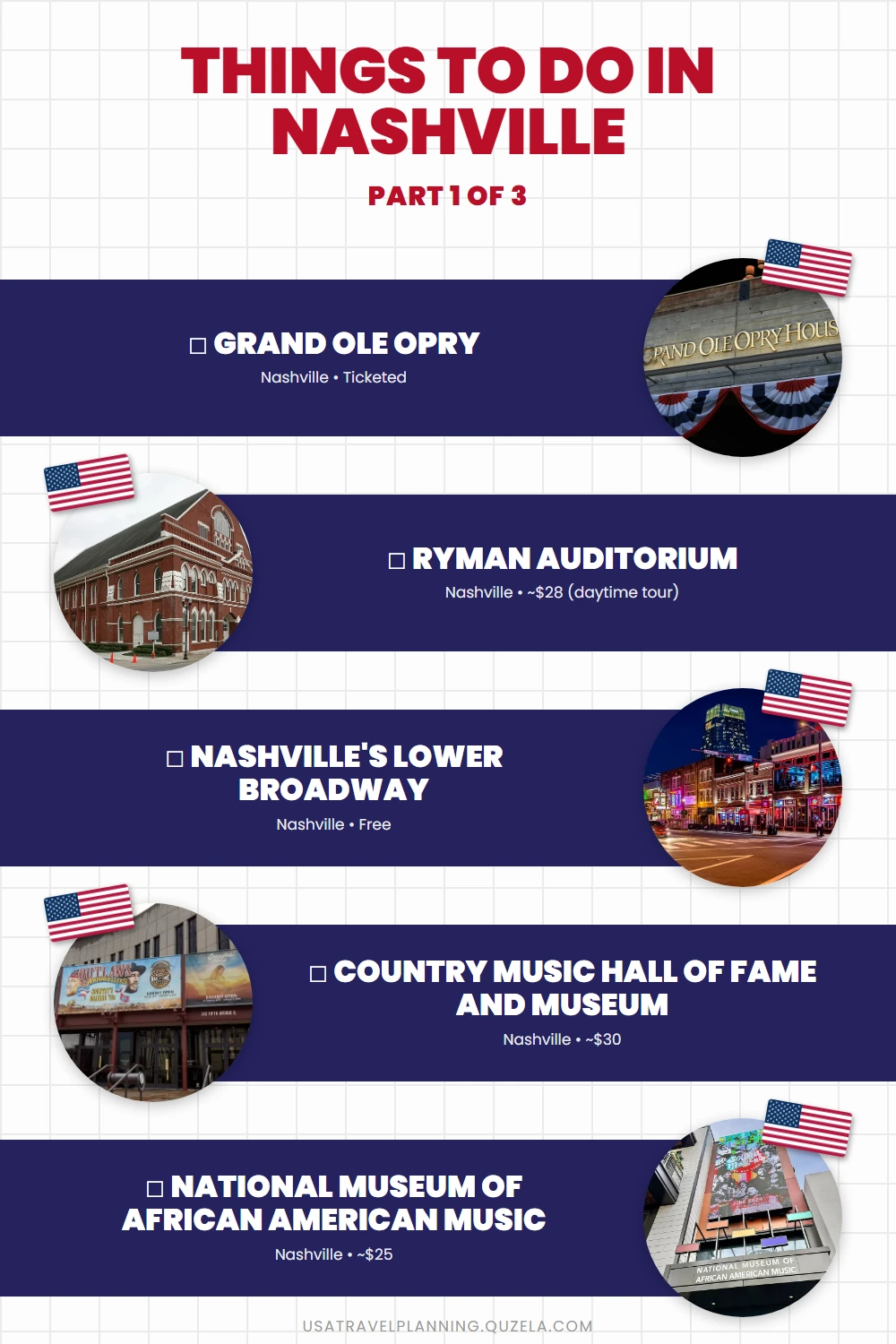
Grand Ole Opry Must-see
Davidson County · Nashville
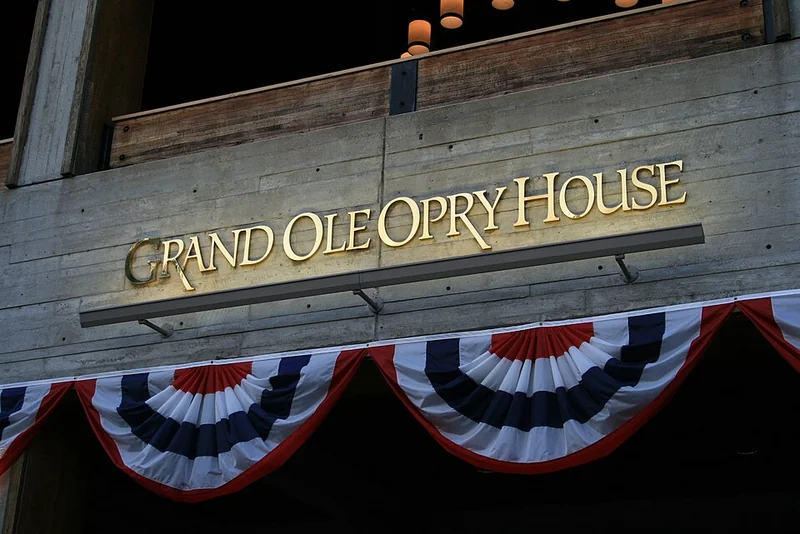
The world's longest-running live radio broadcast, founded in 1927. Originally broadcast from the Ryman Auditorium downtown, the Opry moved to its current 4,400-seat hall at the Opryland complex in 1974. About 200 shows a year feature active country artists, Opry members, and occasional legends. The Saturday night broadcast is the flagship event and has featured every significant country artist of the last century.
Right for country music fans and visitors who want to experience the world's longest-running live radio broadcast in person; the Saturday night show is the flagship. Less essential for visitors not drawn by country music — the Ryman delivers a stronger architectural and historical experience for that audience.
Watch on YouTube · View on Google Maps
Ryman Auditorium Must-see
Davidson County · Nashville
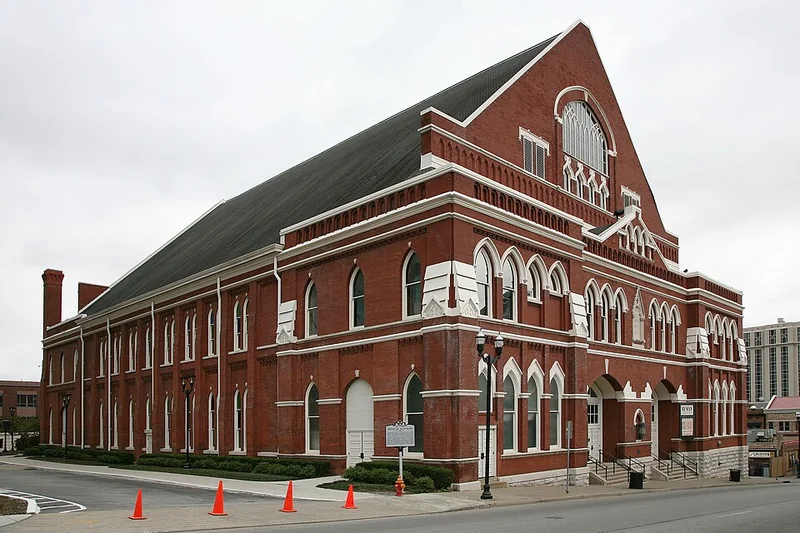
Built in 1892 as a revival tabernacle; the Grand Ole Opry's home from 1943 to 1974, earning it the title "Mother Church of Country Music." The 2,362-seat hall still hosts concerts, awards shows, and ticketed daytime self-guided tours. Original church-pew seating, near-perfect acoustics, and a stage where Johnny Cash, Patsy Cline, and Hank Williams Sr. all performed during the Opry years. One of the genuinely irreplaceable rooms in American music history.
Right for music history enthusiasts and performing arts travelers; sitting where Patsy Cline and Hank Williams performed is the strongest single music-history experience in Nashville. A daytime self-guided tour is the right choice if no show is scheduled during your visit.
Watch on YouTube · View on Google Maps
Nashville's Lower Broadway (Honky Tonk Highway) Must-see
Davidson County · Nashville
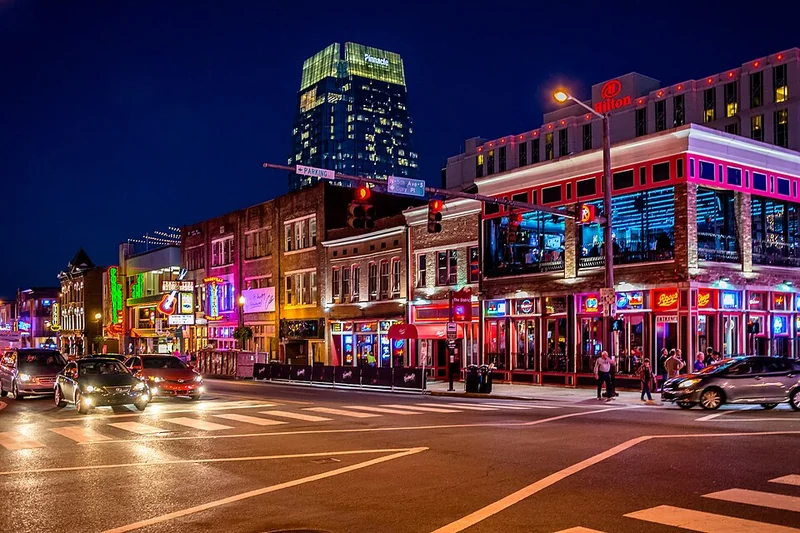
A four-block strip of bars, boot stores, and live music venues along Broadway between 1st and 5th Avenues. Entry is free to every bar; live bands play from noon through 3 AM, seven days a week. Tootsie's Orchid Lounge (open since 1960) and Robert's Western World are the oldest and most authentic. Arrive before 8 PM on weekends to move freely — the strip gets genuinely packed after dark.
Right for all visitors as the social core of a Nashville trip; free to walk, live music from noon, and genuinely unlike any other entertainment strip in the country. Essential regardless of whether country music is the draw.
Watch on YouTube · View on Google Maps
Music Museums
Country Music Hall of Fame and Museum Must-see
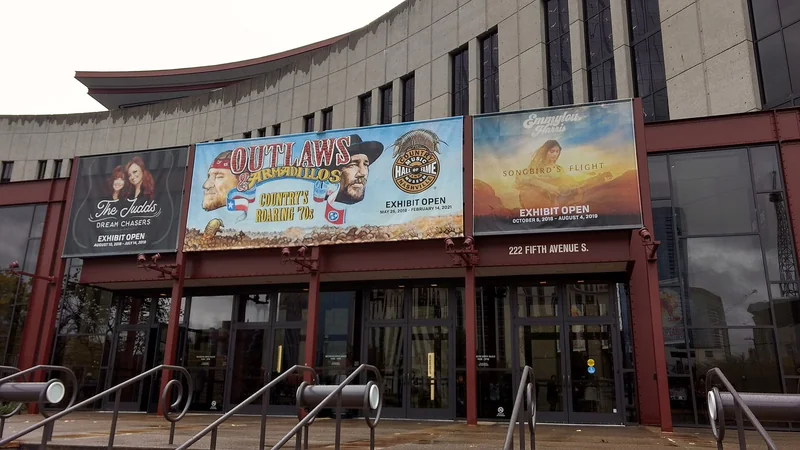
Davidson County · Nashville
The most comprehensive country music archive in the world — 350,000 square feet, 2.5 million artifacts. The permanent collection spans Jimmie Rodgers and Hank Williams to Taylor Swift, with Elvis's gold Cadillac and Nudie Cohn's rhinestone suits as permanent fixtures. Rotating exhibitions cover living artists and deep genre history. Attached to Historic RCA Studio B (separate ticketed tour), where Elvis, Dolly Parton, and Roy Orbison all recorded.
Right for country music fans and visitors who want the deepest available archive of American roots music; the scale and depth here exceeds any other music museum in Nashville. Plan a half-day minimum — pair with the Historic RCA Studio B tour if tickets are available.
Watch on YouTube · View on Google Maps
National Museum of African American Music Must-see
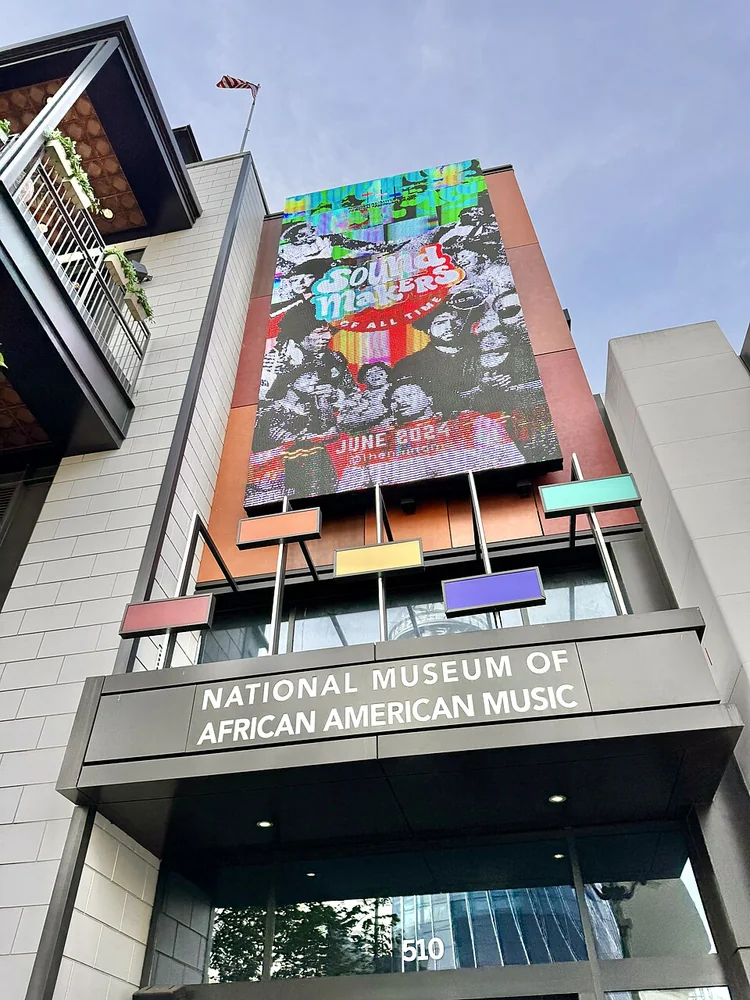
Davidson County · Nashville
Opened January 2021 on Broadway, one block from the Country Music Hall of Fame. The only museum in the United States dedicated entirely to the African American music legacy — blues, gospel, jazz, R&B, soul, hip hop, and the African American roots of country music. 150+ years of music history across five interactive galleries. Visitors can record themselves in a vocal booth and explore a 360-degree musical timeline.
Right for music history enthusiasts and visitors who want to understand the Black roots of every American genre; the interactive format makes the 150-year narrative accessible across ages. One block from the Country Music Hall of Fame — pair them in a single afternoon.
Watch on YouTube · View on Google Maps
Southern Food
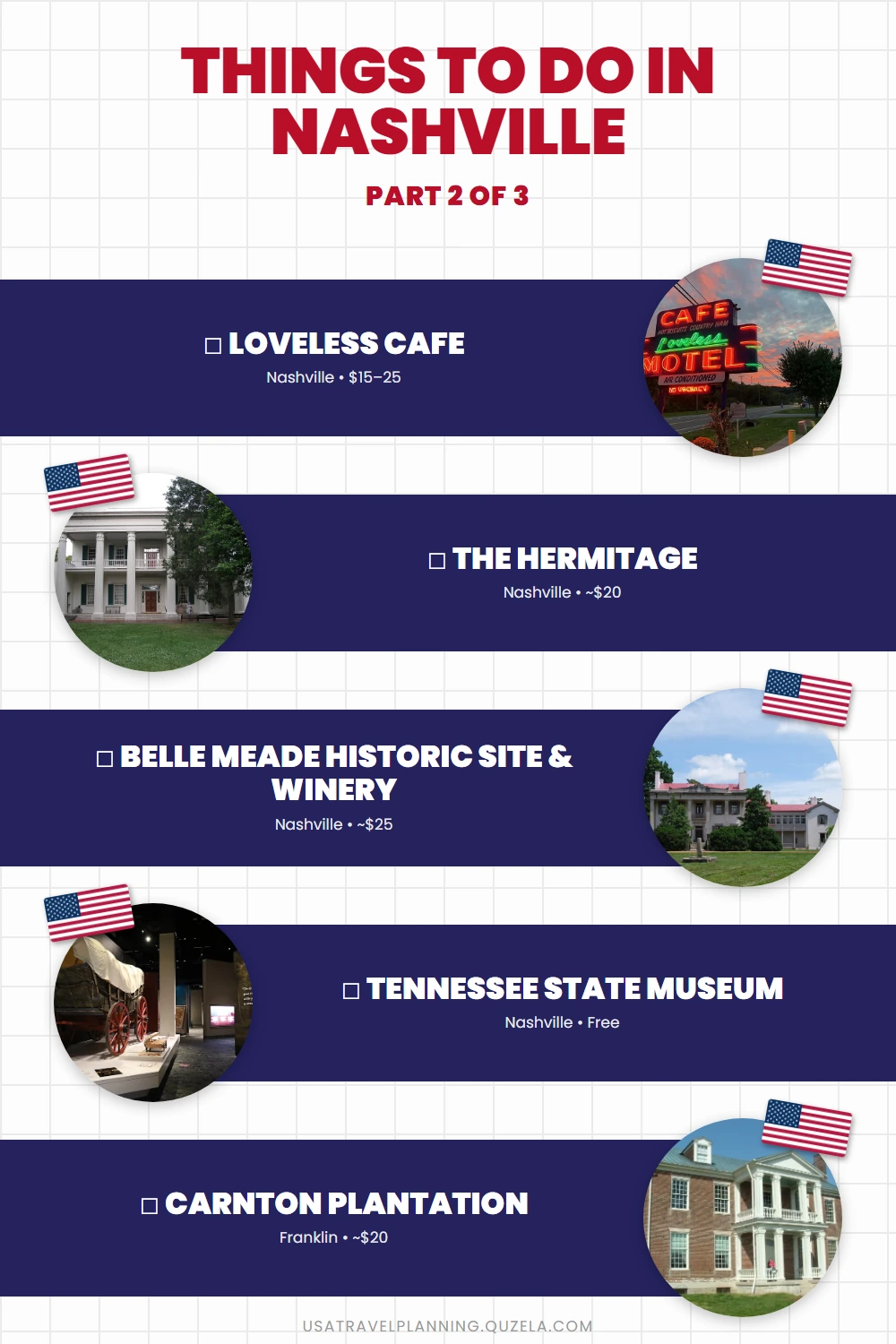
Loveless Cafe Must-see
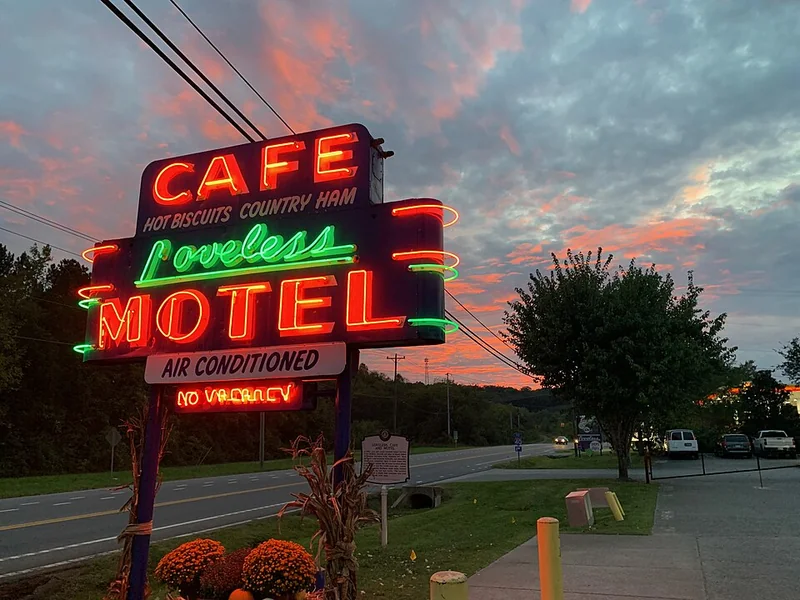
Davidson County · Nashville
Open since 1951, 12 miles west of downtown on Highway 100 at the edge of the city. Famous for hand-rolled biscuits, country ham, and house-made preserves. James Beard Award-recognized. Weekend waits run 45–60 minutes. The original roadside motel rooms out back are still standing. Live music most Saturdays on the back porch.
Right for Southern food travelers who want the most celebrated version of Nashville's biscuit-and-country-ham tradition; a 75-year institution with a James Beard reputation worth the 12-mile drive. Arrive before 10 AM on weekends or plan for a 45–60 minute queue.
Watch on YouTube · View on Google Maps
USA Travel Planner — Google Sheets
One purchase. Every US state. Forever.
A pre-filled travel dashboard for every US state — we are actively building them out.
- 75+ curated attractions — pre-researched for you
- Built-in budget tracker (countdown, expenses, remaining)
- Step-by-step planning tabs
- Buy once — get all future states free as they launch
History & Heritage
The Hermitage (Andrew Jackson's Estate) Worth the detour
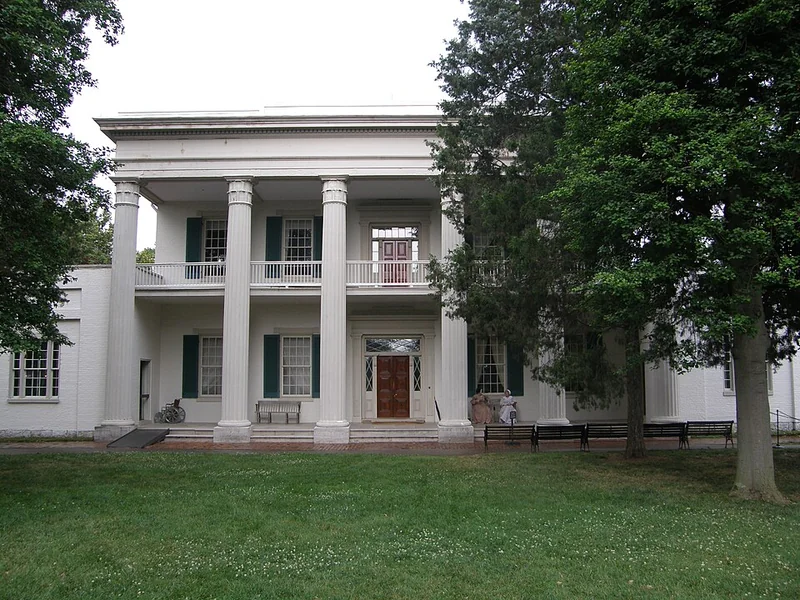
Davidson County · Nashville
Andrew Jackson's plantation home, 12 miles east of downtown. Jackson lived here from 1804 until his death in 1845; the Federal-style mansion is largely original, with period furnishings and personal letters intact. The formal garden holds both Andrew and Rachel Jackson's tomb. The 600-acre property also interprets the lives of the enslaved people who worked the plantation — the exhibit covers named individuals and their specific roles, unusually thorough for a presidential historic site.
Right for presidential history enthusiasts and visitors with a full Nashville day; the unusually thorough coverage of enslaved people's lives makes this more than a standard mansion tour. 12 miles east — plan it as a dedicated half-day trip rather than a quick add-on.
Watch on YouTube · View on Google Maps
Belle Meade Historic Site & Winery Worth the detour
Davidson County · Nashville
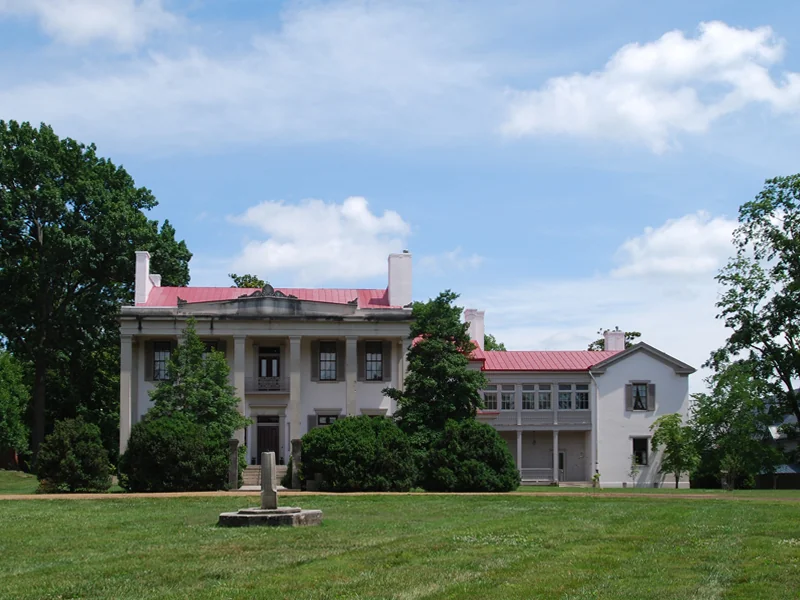
Greek Revival mansion built in 1853, 10 minutes from downtown. Before the Civil War, it was the country's most famous thoroughbred horse farm — five horses from Belle Meade directly sired Kentucky Derby champions. Now a museum with costumed guides, wine tasting in the carriage house, and the original stallion barn where champions like Iroquois were stabled.
Right for antebellum history and horse-racing enthusiasts, and couples who want wine tasting with historical context; the thoroughbred lineage story is the strongest element. 10 minutes from downtown — an easy half-day add for visitors with multiple Nashville days.
Watch on YouTube · View on Google Maps
Tennessee State Museum Worth the detour
Davidson County · Nashville
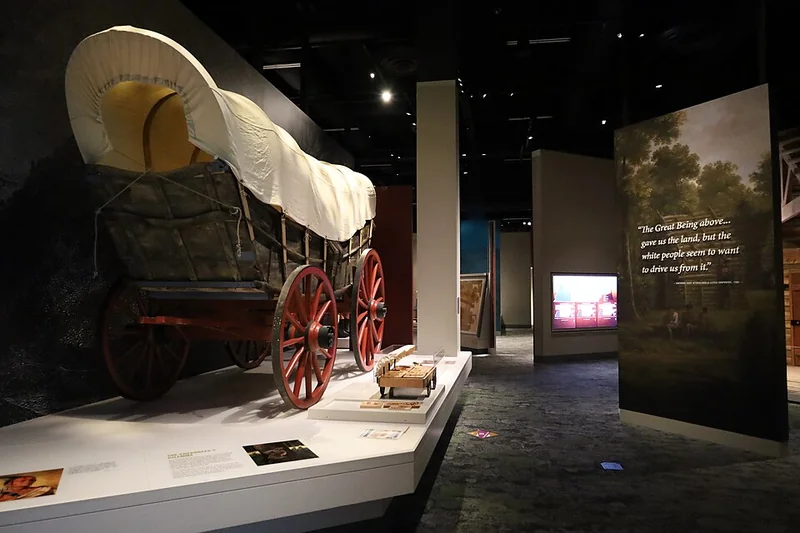
Free admission. Opened in its current building in 2019 — 60,000 square feet covering Tennessee from prehistoric inhabitants to the 20th century. Major sections address the Trail of Tears, Civil War campaigns, the 1925 Scopes Trial, and Nashville's country music emergence. The collection holds 600,000 objects — the largest state history collection in Tennessee.
Right for all visitors wanting Tennessee context before exploring the rest of the city; free admission removes any risk. The Trail of Tears and Civil War sections are the strongest exhibits — worth 90 minutes even for visitors who don't typically seek out history museums.
Watch on YouTube · View on Google Maps
Carnton Plantation (Battle of Franklin) Must-see
Williamson County · Franklin
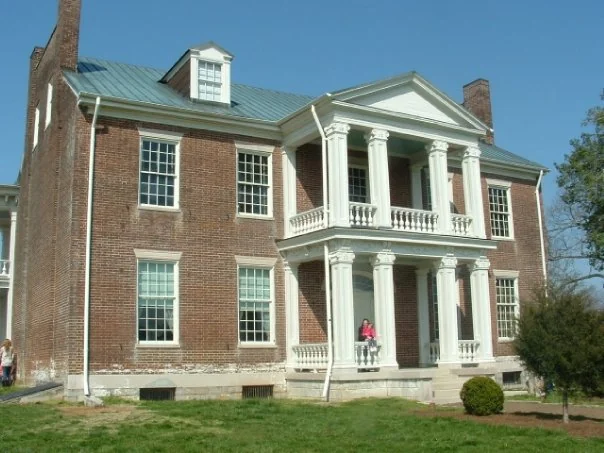
In Franklin, 20 miles south of Nashville. On November 30, 1864, the Battle of Franklin produced approximately 9,500 casualties in five hours — one of the bloodiest single-day engagements of the entire Civil War. Carnton Plantation served as the primary field hospital; bloodstains are still visible on the original wood floors. Four Confederate generals were laid out on the back porch after the battle. The adjacent McGavock Confederate Cemetery holds 1,481 soldiers — the largest private Confederate cemetery in the United States.
Right for Civil War history enthusiasts and serious history travelers willing to drive 20 miles south; the blood-stained floors and the largest private Confederate cemetery in the US make this among the most affecting Civil War sites in Tennessee. Less essential for visitors with limited Nashville time — prioritize the city core first.
Watch on YouTube · View on Google Maps
Unique Nashville
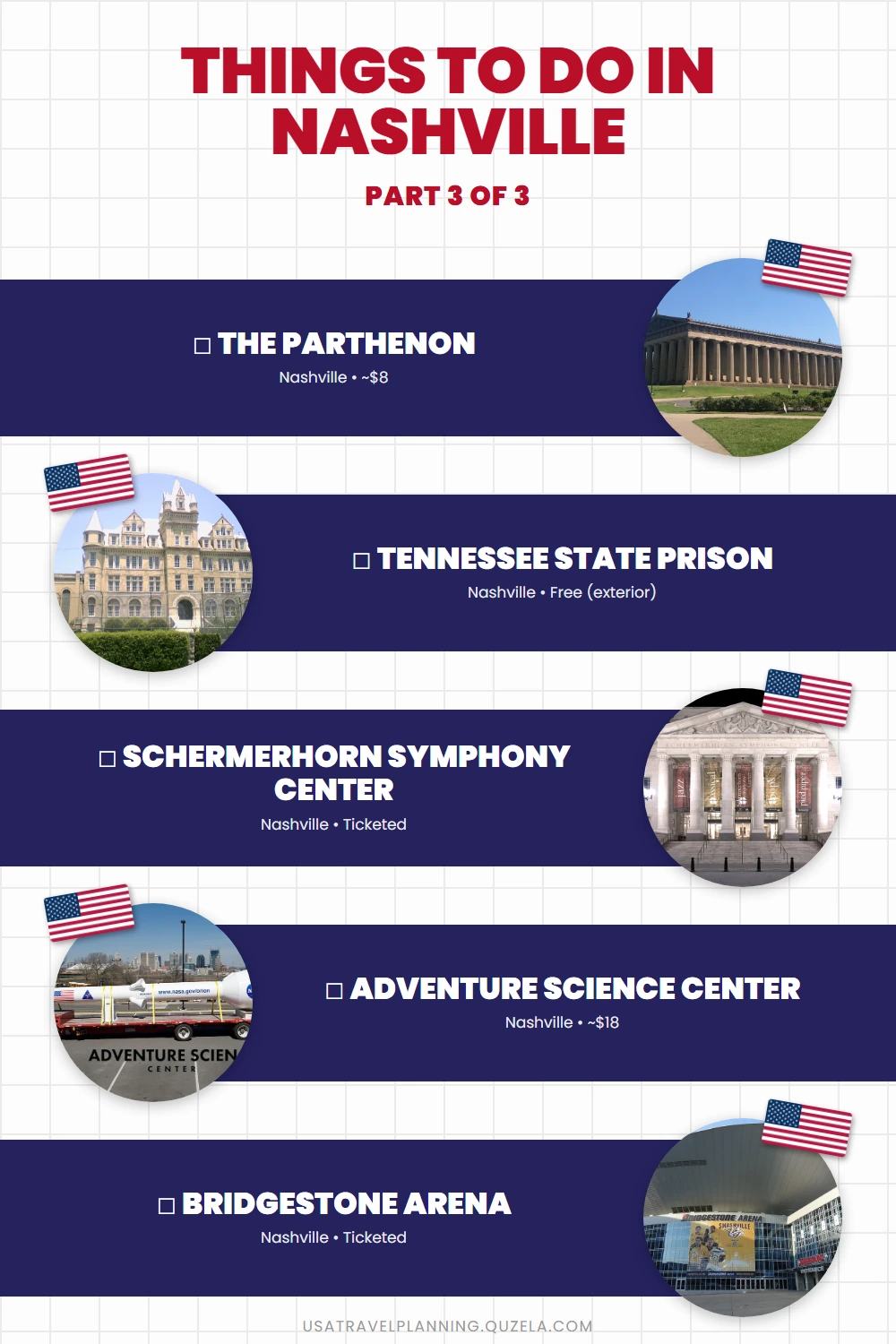
The Parthenon (Full-Scale Replica, Nashville) Must-see
Davidson County · Nashville
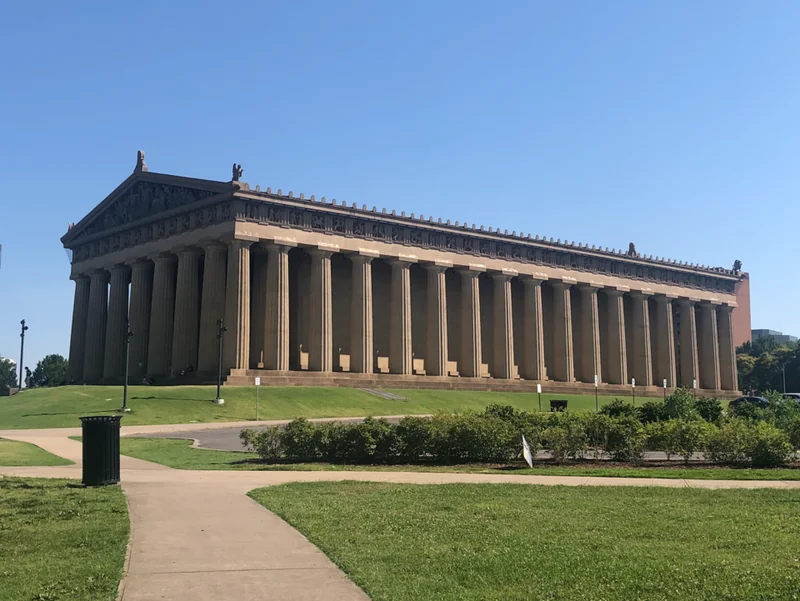
The only full-scale replica of the Athens Parthenon in the world, built in 1897 for Tennessee's Centennial Exposition. Located in Centennial Park, 2 miles from downtown. Inside stands a 42-foot gilded statue of Athena — the largest indoor sculpture in the Western Hemisphere. The exterior is free to view from the park; interior gallery entry is ticketed. It consistently surprises visitors who expect a novelty and find a serious architectural and sculptural achievement.
Right for all visitors with an hour to spare; the full-scale replica consistently surprises those who expect a novelty and find a serious architectural achievement. The park exterior is free — interior tickets add the 42-foot Athena statue, the largest indoor sculpture in the Western Hemisphere.
Watch on YouTube · View on Google Maps
Tennessee State Prison (The Green Mile, 1999) Must-see
Davidson County · Nashville
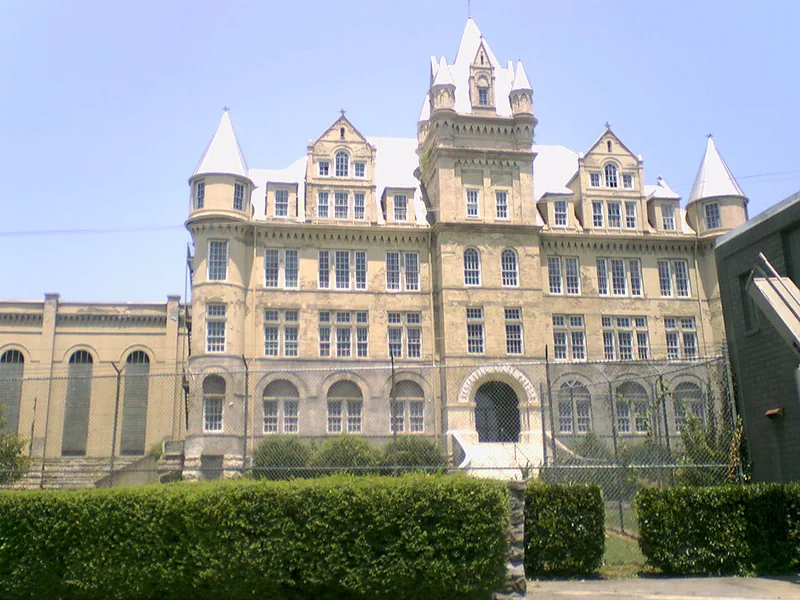
The 1898 Gothic Revivalist stone prison in West Nashville — turrets, stone walls, arched gates — was the exterior filming location for The Green Mile (1999) and has appeared in multiple productions since. Decommissioned in 1992 and vacant for decades, it is now being converted to mixed-use development. The exterior is visible from the road and photographed constantly. Guided film-location tours are offered periodically.
Right for film location enthusiasts and architecture travelers drawn to Gothic Revivalist industrial buildings; the 1898 stone exterior is striking without needing the film connection. A free roadside stop — worth slowing down for if the route passes through West Nashville.
Watch on YouTube · View on Google Maps
Schermerhorn Symphony Center Worth the detour
Davidson County · Nashville
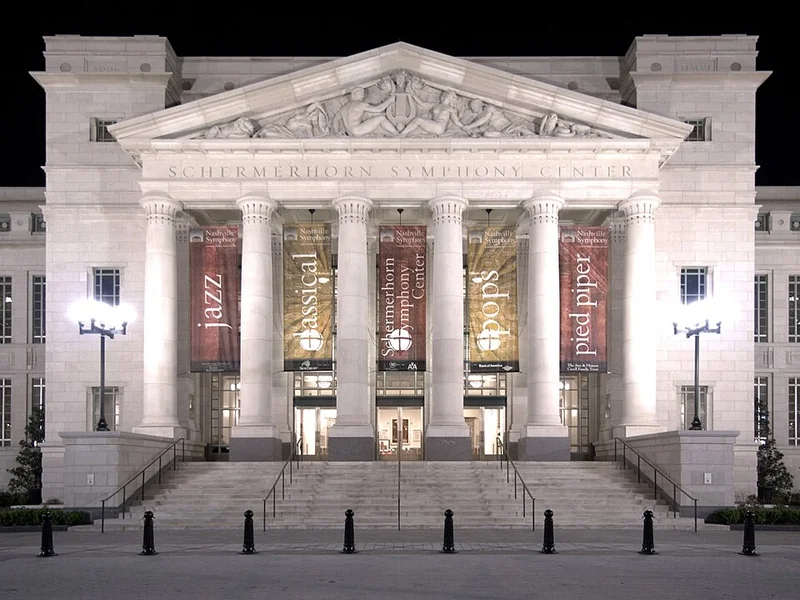
Home of the Nashville Symphony, opened 2006. Designed specifically for orchestral sound by David M. Schwarz — the 1,872-seat Laura Turner Concert Hall uses variable acoustics and a natural daylight system; large windows open at intermission to reveal the Nashville skyline, particularly striking at dusk. Also hosts film-with-orchestra events and touring chamber ensembles.
Right for classical music travelers and performing arts visitors; Nashville's symphony punches above the city's reputation and the hall itself is genuinely world-class. Check the schedule before the trip — the building alone doesn't justify a visit without a performance.
Watch on YouTube · View on Google Maps
Adventure Science Center (Nashville) Worth the detour

Davidson County · Nashville
Interactive science museum and digital planetarium in Fort Negley Park, overlooking downtown. 175+ hands-on exhibits across health, earth science, and physics. The 75-foot Science Tower is the centerpiece — a themed climb with city views at the top. The planetarium runs multiple shows daily. Best for families with children, though the rocket and physics exhibits draw adults.
Right for families with children wanting an engaging alternative to the music district; the 75-foot Science Tower and planetarium are the strongest draws. Less essential for adults without children — the rest of Nashville's attractions offer stronger experiences for grown-up itineraries.
Watch on YouTube · View on Google Maps
Bridgestone Arena (Nashville Predators) Worth the detour
Davidson County · Nashville
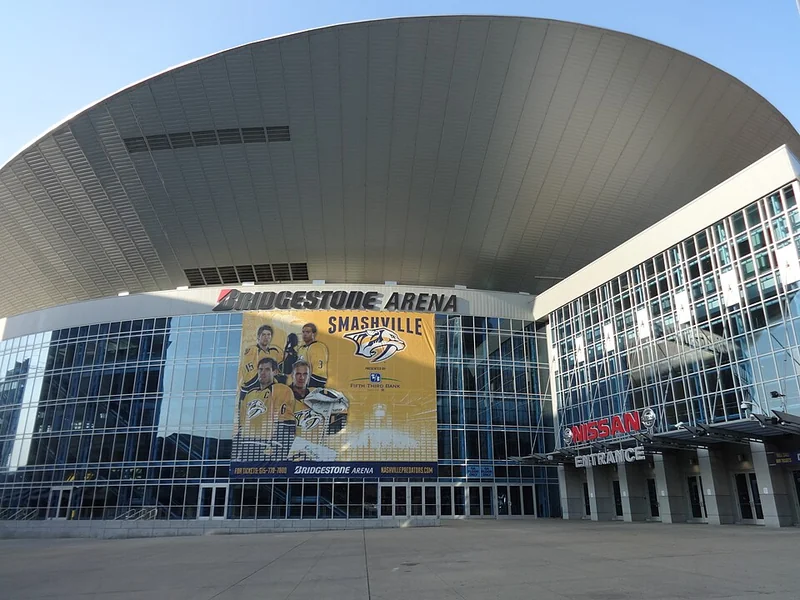
17,000-seat arena one block from Lower Broadway. Home of the Nashville Predators (NHL), consistently ranked one of the loudest arenas in hockey — playoff crowds here are a specific phenomenon worth experiencing. Concerts and events run year-round. A Predators home game paired with an evening on Lower Broadway is a reliable Nashville night, October through April.
Right for NHL fans and visitors whose October–April trip includes a home game; the arena's crowd energy is one of the loudest in hockey and pairs naturally with a Broadway evening — the two are one block apart. Skip outside game-night context unless attending a concert.
Watch on YouTube · View on Google Maps
Planning Notes
Where to stay: Downtown and The Gulch put you walking distance from Lower Broadway, the Ryman, and the major museums. East Nashville has boutique hotels with more character and generally lower prices, a 10-minute rideshare from Broadway. Avoid airport hotels unless catching an early flight — everything worth seeing is downtown.
Book ahead: Grand Ole Opry Friday and Saturday shows sell out — buy tickets as soon as your dates are set. Ryman Auditorium live concerts also sell out; daytime tours are usually walk-in. Country Music Hall of Fame is busy in peak season but rarely sells out. Loveless Cafe has a wait on weekends; arrive before 10am.
Getting around: Lower Broadway and the surrounding blocks are walkable. A car or rideshare is needed for Loveless Cafe (8 miles west on Highway 100), Carnton Plantation in Franklin (20 miles south), and the Tennessee State Prison exterior (10 miles from downtown). Downtown parking is expensive; rideshare from a Gulch hotel is practical.