Sockwell Women's / CEP Progressive+ Compression Socks
Eight hours in a car or on a plane leaves your legs swollen, heavy, and slow to recover. Compression socks prevent this and cost less than one dinner on the trip.
View on AmazonAvailable on Amazon — ships fast.
Why long drives leave your legs feeling wrong
During extended sitting — in a car seat, plane seat, or bus — the calf muscle pump that normally pushes blood up through your veins toward the heart stops working. Blood pools in the lower legs. Fluid leaks into surrounding tissue. The result is visible swelling at the ankles, a heavy aching feeling in the calves, and legs that feel stiff and slow to respond when you finally stand up. On a 10-hour drive from Atlanta to South Florida, or an 8-hour flight to the West Coast, this isn't a hypothetical discomfort — it's a reliable physiological outcome that gets worse with age and makes your first hours at the destination feel like a waste. Compression socks apply graduated pressure (tightest at the ankle, tapering up the leg) that mechanically supports blood return without relying on the calf muscle pump to do the work.
What we looked at first
We looked at drugstore compression socks (Walgreens, CVS brands) and ruled them out for travel use — they typically offer 8–15 mmHg of compression, which is below the 15–20 mmHg threshold where circulation benefits become meaningful in research. We looked at medical-grade 20–30 mmHg compression and found it appropriate for people with diagnosed circulation problems but excessive for healthy travelers — the socks become difficult to put on and uncomfortable for a full day of walking after the flight. CEP's 15–20 mmHg and Sockwell's graduated compression options sit in the sweet spot: clinically meaningful compression without the prescription-level tightness that makes them impractical for all-day wear on travel days that include walking after arrival.
What you get
- 15–20 mmHg graduated compression — the clinically validated range for travel-related edema prevention; measurably reduces ankle swelling on flights over 4 hours compared to standard socks
- Merino wool or nylon-spandex options — Sockwell's merino blend regulates temperature across the range of travel conditions (cold plane cabin, warm destination); CEP's nylon version is lighter and dries faster
- Full-day wearable — designed for wear from departure through arrival and into the first day of walking; compression socks that double as hiking socks save a packing slot
- Machine washable — maintained compression through dozens of washes, unlike cheap compression socks that lose elasticity after 5–10 cycles
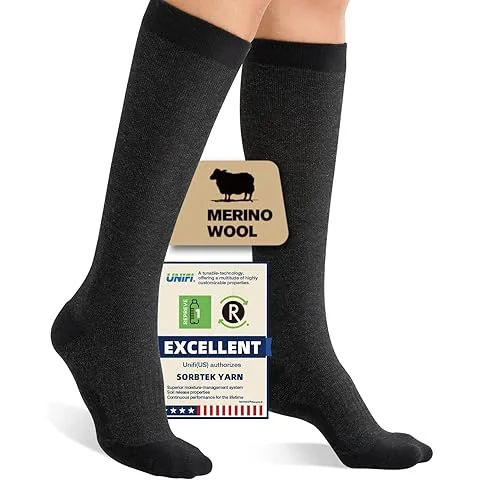
Who this is for
Anyone doing a road trip of 6+ hours or a flight of 4+ hours — especially people over 35 who have noticed that long drives produce more leg fatigue than they used to, anyone with a history of ankle swelling during travel, and travelers doing back-to-back driving days on a multi-state road trip where leg recovery matters for the next day's activities. Also specifically useful for travelers who plan to walk significantly upon arrival (city exploration, hiking) where arriving with swollen, heavy legs costs real itinerary time.
Where to use it on your trip
The Nashville-to-Atlanta drive on I-24 and I-75 runs roughly 4 hours — a short enough trip that most people don't think about compression, but long enough to produce noticeable ankle swelling by arrival if you're prone to it. The drive from Atlanta south to Miami along I-75 and Florida's Turnpike runs 9–10 hours; anyone doing this as a one-day push should be wearing compression from the moment they get in the car. Cross-country drives from the Southeast to California run 25–30 hours of total drive time across 3–4 days — cumulative compression benefit matters more here than on any single-day trip.
Who should skip it
Travelers doing short drives under 3 hours don't need compression socks for circulation benefit — the exposure time isn't long enough to produce meaningful pooling. Frequent walkers who take regular breaks (stopping every 60–90 minutes on road trips) reduce the circulation risk enough that compression socks become optional rather than recommended.
Our take
Buy this if you're doing any flight over 4 hours or road trip drive day over 6 hours — especially if you plan to hit the ground walking the moment you arrive. The CEP and Sockwell brands are both the right choice for different reasons: CEP if you want a lightweight, sporty fit; Sockwell if you want merino temperature regulation for varying climates. Skip compression socks for short drives with frequent breaks.
Ready to get it?
Available on Amazon — ships fast.
View on AmazonWe may earn a commission if you purchase through our link, at no extra cost to you.