Packable Down Jacket
A jacket that stuffs into its own pocket — because mountain mornings are 42°F even when the afternoon is 68°F.
View on AmazonAvailable on Amazon — ships fast.
The layering problem on Southern mountain trips
Fall in the Smokies, spring in the Blue Ridge, October in the Catskills — the weather pattern is the same: you wake up and it's 40°F at the trailhead, you're in a t-shirt by 10am, and by 3pm when you're on the exposed ridge it drops back to 45°F with wind. Carrying a full mid-layer jacket for a two-hour window sounds reasonable until you're sweating through it on the climb. The answer is a packable down jacket: warm enough to matter at 40°F, light enough to stuff in your daypack hip pocket and forget about until you need it, and cheap enough that you're not babying it.
What we looked at first
Fleece pullovers are a common choice — they handle moisture better than down when wet but compress to half the size at best and weigh twice as much. Softshell jackets add wind protection but no real insulation — they're a rain layer, not a warmth layer. The Patagonia Down Sweater ($279) is the benchmark product and genuinely excellent, but at three times the price of most Amazon options, it's the right choice only if you're buying a jacket to last fifteen years. The Columbia Powder Lite and Amazon Essentials equivalent sit in the $60–$100 range with 30,000+ verified reviews and real-world confirmation that they perform at 40–50°F — the exact range these Southern mountain mornings require.
What you get
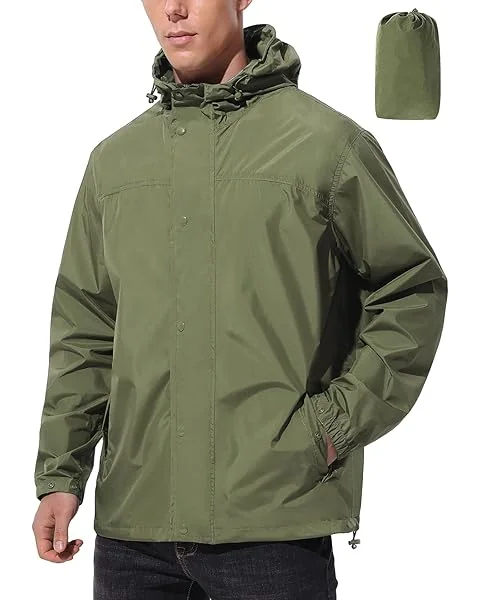
- Stuffs into its own chest pocket — packs to roughly 10x7 inches, fits in a daypack or purse
- 8–12 oz total weight — you'll forget it's in your bag until you need it
- Wind and water resistant shell — repels light rain and mountain wind without a separate rain layer
- Machine washable down fill — no dry-clean-only complications on a camping trip
Who this is for
This is for the traveler doing fall or spring mountain trips in the South — Tennessee, North Carolina, Georgia, Virginia — where temperature swings of 20–30°F between morning and midday are standard. It's for anyone who has ever arrived at a mountain overlook and been surprised by how cold wind feels at elevation. It's for road trippers who need a versatile layer that handles one cold morning in Tennessee and one warm afternoon in Florida without taking up half a suitcase.
Where to use it on your trip
At Clingmans Dome in the Smokies, the parking area sits at 6,311 feet — roughly 20°F colder than Gatlinburg in the valley below. Even in August, morning visitors need a layer at the top. On the Appalachian Trail corridor through northern Georgia, October hikers regularly encounter sub-45°F nights at elevation even as nearby towns are in fleece-and-jeans weather. In Blue Ridge, Georgia, October morning temps at Lake Blue Ridge routinely hit the low 40s while afternoon trail temps reach 65°F — exactly the use case a packable down jacket solves.
Who should skip it
Summer-only travelers who stay in the South in June, July, and August at lower elevations — you won't use it. Anyone doing cold-weather camping below 20°F needs a real insulated parka, not a packable layer. If fit and cut matter significantly to you, down jackets run differently by brand — read reviews carefully for your size range.
Our take
Buy this for any fall or spring mountain trip in the Eastern US — it solves the morning-vs-afternoon temperature problem better than any other layer at this price and weight. Skip it if you're exclusively a summer or deep-winter traveler; the shoulder season is when it earns its place.
Ready to get it?
Available on Amazon — ships fast.
View on AmazonWe may earn a commission if you purchase through our link, at no extra cost to you.