Counter Assault Bear Deterrent Spray
Great Smoky Mountains National Park has one of the densest black bear populations in North America. Bear spray is the most effective deterrent available — more effective than a firearm in a surprise encounter.
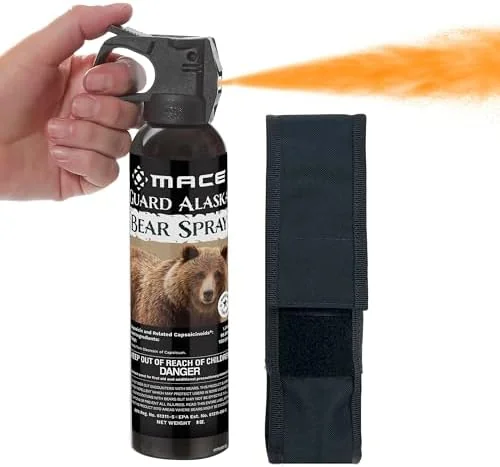
Black bears in the Smoky Mountains are habituated — and that changes the risk
Great Smoky Mountains National Park has an estimated 1,500 black bears and more than 12 million visitors per year — the highest visitation of any national park in the country. The combination produces bears that have lost their natural wariness of humans, approach campsites and trail areas with confidence, and occasionally bluff-charge or charge without warning. This is not the wilderness-remote encounter scenario most people imagine — bear incidents in the Smokies happen at popular overlooks, on well-traveled trails, and at campgrounds. The park reports 5–10 bear incidents involving injury or property damage per year, with dozens of close encounters. Bear spray has been shown in research to stop aggressive encounters more consistently than firearms in national park conditions, where a charging bear often closes 30 feet in under two seconds.
What we looked at first
We looked at Frontiersman Bear Spray and UDAP Bear Pepper Spray — both are EPA-registered and legitimate. Frontiersman (7.9 oz, 30 feet) is the most direct competitor to Counter Assault and works comparably. UDAP is recommended by some rangers and has a slightly lighter can for backpacking weight budgets. We considered firearms and ruled them out as the comparison point: study data from Alaskan bear country shows bear spray resolves encounters with injury in 2% of cases, while firearms result in injury in 50% of cases — the combination of stress, speed, and adrenaline makes accurate shooting at a charging bear nearly impossible. Counter Assault's 30-foot range and 7.9-second discharge time are the specific specs that matter in a surprise encounter — they set the baseline we recommend.
What you get
- 30-foot range — reaches the bear before it closes the distance; the extra range over shorter-range models gives you 1–2 additional seconds to deploy
- 7.9-second continuous discharge — enough to maintain a cloud barrier and redirect a charging animal; shorter canisters (4–5 seconds) risk emptying before the encounter resolves
- EPA-registered formula — the minimum capsaicin concentration proven effective in bear deterrent research; not all 'bear sprays' on Amazon meet this threshold
- Bear Guard carrying case — holster attaches to pack waist belt for immediate one-hand access; spray in a pack bottom is useless in a fast encounter
Who this is for
Any hiker doing backcountry overnight trips in Great Smoky Mountains National Park, Shenandoah National Park, or any black bear country with overnight camping in the southern Appalachians. Also for day hikers in high-bear-activity areas like the Appalachian Trail in Georgia and Tennessee, Yosemite in California, and any national park with posted bear activity warnings. This is not limited to backpackers — anyone on a trail in active bear habitat benefits from having it accessible.
Where to use it on your trip
Great Smoky Mountains National Park in Tennessee — backcountry permit areas in the Smokies have active black bear populations and the park explicitly recommends bear spray for overnight users; the Alum Cave Trail, Rainbow Falls Trail, and all backcountry camping zones are high-activity areas. Big South Fork National River and Recreation Area in Tennessee — a less-visited park with less habituated bears and remote backcountry campsites where encounters are more unpredictable. Yosemite National Park in California — the park has bear-proof food storage requirements but does not prohibit bear spray; hikers in the backcountry above the valley are in active black bear territory.
Who should skip it
Day hikers on developed interpretive trails within sight of visitor centers, or hikers at urban-adjacent parks where bears are rarely encountered, don't need this on every trip. If your hiking stays on busy day-use trails at front-country areas of well-managed parks, your risk is low enough that other precautions (food storage, noise on trail) are the primary management tools. Do not carry bear spray on flights — it is prohibited by the TSA on all aircraft.
Our take
Buy this if you're doing any overnight backcountry camping in the southern Appalachians or any national park with active bear populations. The Counter Assault is the field standard for a reason: 30-foot range and 7.9 seconds give you the margin you actually need in a surprise encounter. Carry it on your hip belt, not in your pack. Skip it for front-country day hiking on busy trails — but understand that 'busy' is relative in a 522,000-acre park.
We may earn a commission if you purchase through our link, at no extra cost to you.