National Geographic Complete National Parks of the USA
Your phone has no signal at Clingmans Dome. The National Geographic guidebook doesn't need it.
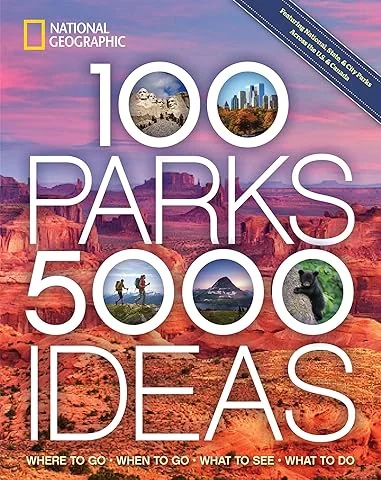
What the internet can't tell you at the summit
Great Smoky Mountains National Park receives over 12 million visitors per year — making it the most visited national park in the country — and its cellular coverage ranges from spotty at the visitor centers to entirely absent on most trails and scenic overlooks. The Everglades in Florida has no reliable signal across most of its interior. Dry Tortugas, a national park accessible only by boat or seaplane from Key West, has no cell towers within reach. In all three of these places, a physical guidebook isn't a nostalgic choice — it's the only reference that actually works. And a guidebook with National Geographic's cartography and photography is also the planning tool that lets you prepare before the signal disappears, so the time in the park is spent experiencing it rather than searching for information.
What we looked at first
We looked at individual park apps (NPS has an official app per park) and they're genuinely useful when downloaded and cached before entering the park, but they require pre-planning that most travelers don't do — and they cover one park at a time, not the full context of how parks relate to each other on a multi-park road trip. We looked at Moon National Parks: USA (a strong alternative from a different publisher) and found it more text-heavy and less visually rich — better for the reader who wants deep planning detail, less suited for the coffee-table-plus-travel-planning hybrid that the National Geographic format provides. We looked at individual Moon state park guides and they're excellent for single-state depth but don't help with the multi-park perspective that covers most US national park trips.
What you get
- All 63 designated US national parks covered in one volume — useful from pre-trip planning through in-park navigation
- National Geographic cartography with trail maps, park boundaries, and entrance point detail — the quality standard for outdoor maps
- Full-spread photography for each park — the visual context that helps you understand what you're actually going to see before you arrive
- Planning sections covering best times to visit, permit requirements, and seasonal access — the practical information that prevents showing up at the wrong time of year

Who this is for
This is for the traveler planning any national park visit — first-timers who want context before arriving, experienced visitors who want to expand their list, or road trippers doing a multi-park circuit through the Southeast and Southwest. It's especially valuable for anyone visiting parks that are genuinely remote or signal-dead, where offline reference material is practical rather than optional. It also works beautifully as a planning document for the year: most people who own it use it to make their list before they travel, not just during.
Where to use it on your trip
At Great Smoky Mountains National Park in Tennessee — the most visited national park in the country — the guidebook covers the trail network, the Cades Cove loop, Clingmans Dome, and the Cherokee visitor context that online searches don't consolidate in one place. At Everglades National Park in Florida, the guidebook's coverage of the Anhinga Trail, Flamingo Point, and the seasonal wildlife patterns is the preparation that makes a two-day visit meaningful rather than aimless. Dry Tortugas National Park in Florida — accessible only by ferry or seaplane from Key West — has no phone signal on the island; the guidebook is how you understand what you're looking at while you're there.
Who should skip it
If you're a repeat visitor to the same one or two parks and you already know the trails and the planning calendar, a comprehensive all-parks guidebook adds breadth you don't need. Skip it also if your travel is primarily urban and state park rather than national park — the coverage in this book is national parks specifically, and the state park system in the Southeast isn't included.
Our take
Buy this before any trip that includes a national park stop — it's the planning tool that works offline, gives you visual context before you arrive, and covers the full 63-park system in a format that's genuinely usable in the field. The National Geographic cartography is the industry standard for a reason. Skip it if your park visits are repeats to a place you already know well enough to navigate without reference.
We may earn a commission if you purchase through our link, at no extra cost to you.