Therm-a-Rest Z Lite Sol Sleeping Pad
A sleeping bag insulates you from cold air. It does not insulate you from the ground. That job belongs to the sleeping pad — and skipping it is the most common first-time camping mistake.
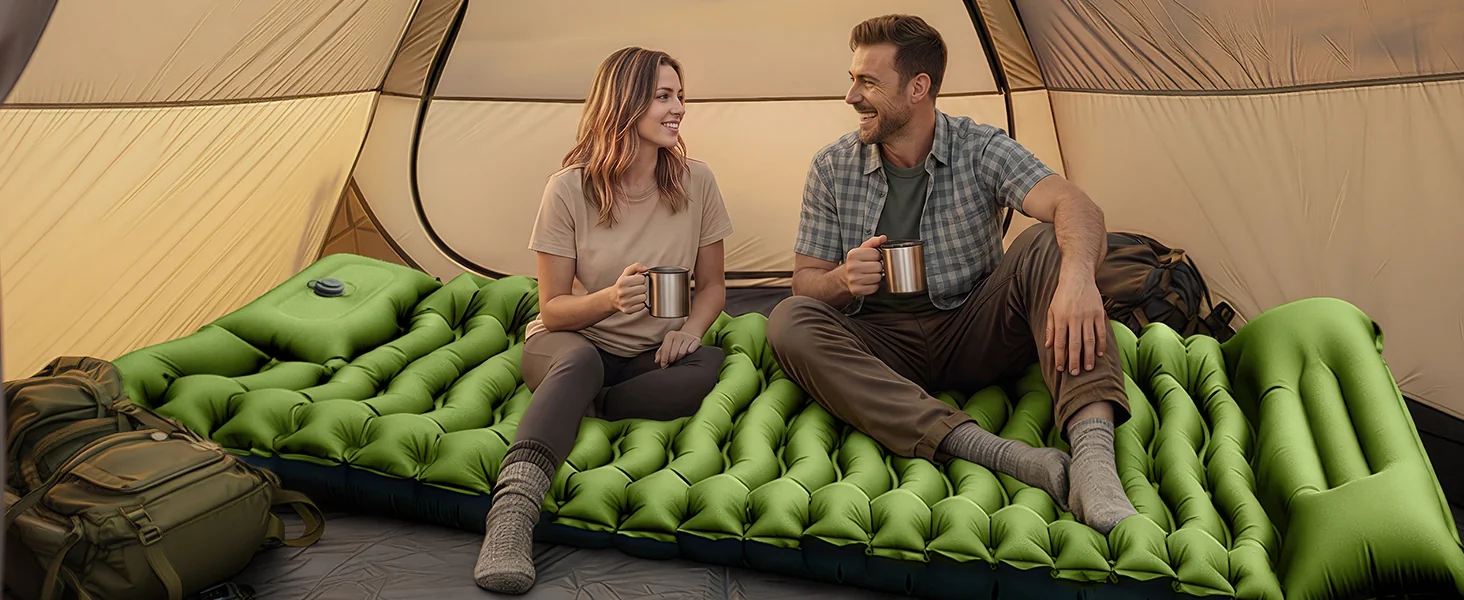
Why sleeping on the ground is colder than sleeping in the air
Sleeping bags trap warm air around your body — but they flatten under your weight. A flattened sleeping bag underneath you insulates almost nothing, because insulation works by trapping air, and compression eliminates that air. The ground beneath you actively pulls heat out through conduction: soil temperature in the Tennessee mountains runs 50–55°F even in summer, and rocky ground is a direct heat sink. The result is that a camper with a quality sleeping bag and no pad wakes up cold from the bottom regardless of what the bag's temperature rating says. A sleeping pad solves the ground insulation problem that no sleeping bag can solve, because it doesn't compress under your weight.
What we looked at first
We looked at inflatable sleeping pads (the Therm-a-Rest NeoAir Xlite and the Sea to Summit Ether Light) and they are excellent for backpackers who need maximum insulation at minimum weight — the NeoAir in particular has the best warmth-to-weight ratio of any sleeping pad made. The tradeoff is puncture risk: an inflatable pad in a rocky Georgia or Tennessee backcountry campsite can be compromised by a single sharp rock that goes unnoticed in the dark. Repair kits exist, but a punctured pad at 2 a.m. in a backcountry site is a miserable problem. We looked at thick self-inflating pads (REI and Big Agnes models) and found them bulky for backpacking and redundant for car camping where you can bring a full air mattress. The Z Lite Sol is the answer for most people — closed-cell foam that cannot puncture, folds accordion-style for pack attachment, and has a three-season R-value (2.0) that covers Georgia, Tennessee, and Florida camping conditions.
What you get
- R-value 2.0 — adequate insulation for three-season camping in Georgia, Tennessee, and Florida; stops ground cold from defeating your sleeping bag
- Closed-cell foam construction — cannot puncture, deflate, or fail; works on rocky ground, roots, and uneven backcountry tent pads without risk
- Accordion fold — attaches outside the pack rather than inside, freeing pack volume for gear; unfolds in seconds with no pumping or inflation
- 14 ounce weight — the lightest full-length sleeping pad available; adds nothing meaningful to a backpacking base weight
Who this is for
This is the right pad for first-time backpackers and experienced hikers alike who want a zero-failure, zero-setup sleeping surface. It works equally well for backcountry permit camping in the Smoky Mountains, primitive sites at Cloudland Canyon, and car camping where simplicity beats luxury. Hikers on the Georgia section of the Appalachian Trail — camping at primitive sites from Springer Mountain north — will find this is the standard pad choice among through-hikers for exactly the conditions they'll face.
Where to use it on your trip
Great Smoky Mountains National Park in Tennessee has a backcountry permit system with primitive shelter and campsite options miles from any road — ground insulation is essential at sites like Spence Field (elevation 4,900 feet) where summer nights regularly drop into the 40s. Big South Fork National River and Recreation Area in Tennessee has primitive camping on rocky river terrace sites where an inflatable pad is genuinely at risk; the Z Lite is the right call here. Cloudland Canyon State Park in Georgia has backcountry tent-only sites with uneven, rocky terrain — closed-cell foam handles this far better than anything inflatable.
Who should skip it
Car campers who want comfort over weight savings are better served by a thick self-inflating pad or a car camping air mattress — the Z Lite is firm and minimal by design. Ultralight backpackers doing desert camping at warm elevation can skip the full-length version and use a 3/4-length pad with a pack under their legs, saving a few ounces.
Our take
Buy this if you're doing any backcountry camping in Georgia or Tennessee and want a pad that cannot fail at the worst moment. Buy it if you're a first-time camper who doesn't want to think about inflation, pumps, or punctures. Skip it if car camping comfort is the priority — bring an air mattress instead. The Z Lite Sol has been the working pad for serious backpackers for two decades because it solves exactly the problem it's supposed to solve without any moving parts.
We may earn a commission if you purchase through our link, at no extra cost to you.