Trail Running / Hiking Shoes
The difference between a trail shoe and a hiking boot is 8 oz and two hours of break-in time — trail shoes are faster, lighter, and the right call for most Southern Appalachian day hikes.
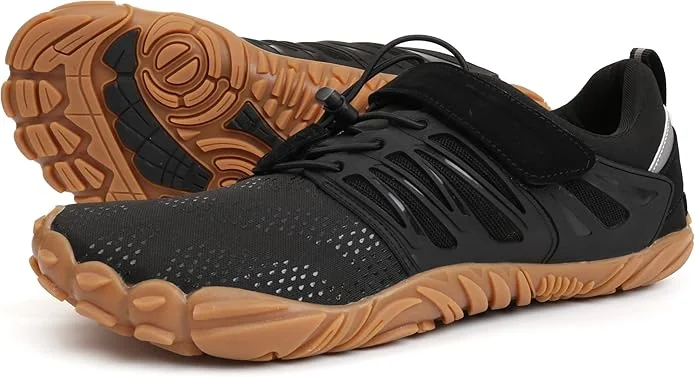
Why serious day hikers have moved to trail shoes
The traditional recommendation for hiking is a mid-cut leather boot with ankle support. That recommendation made sense decades ago for heavy packs and multi-week backcountry trips. For a day hike on a well-maintained Southern Appalachian trail — 6 to 12 miles, a daypack under 20 lbs, maintained tread — the boot's ankle support is overkill and its weight (3–4 lbs per pair) is a liability. Trail running shoes weigh 1.5–2 lbs, have aggressive rubber outsoles with lugs designed for wet rock and root, and need no break-in period. The trail running community figured this out first; the hiking community followed. The Hoka Speedgoat, Salomon Speedcross, and Altra Lone Peak are three shoes designed explicitly for this crossover use.
What we looked at first
Heavy leather hiking boots with ankle support are appropriate for heavy packs, multi-day backcountry trips, or hikers with documented ankle instability — not for most day hikers. Road running shoes lack the lugged outsole that grips wet Georgia granite and Tennessee root systems — a common mistake for runners who try to apply road shoes to trail use. The Salomon Speedcross has the most aggressive lug pattern in the category and is the top choice for muddy Southern Appalachian trails where traction on wet clay is the failure mode. The Hoka Speedgoat is the maximum-cushion option for hikers who prioritize knee and joint comfort on long descents. With 11,000+ reviews across the category, these are well-documented performance picks.
What you get
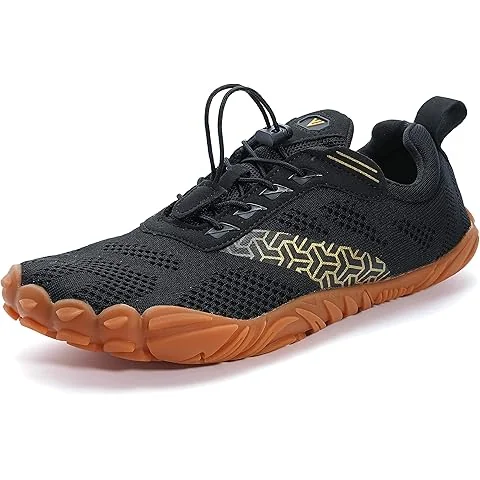
- Lugged rubber outsole — grips wet rock, mud, and root surfaces that smooth road-shoe rubber slips on
- Low-to-mid drop (0–8mm) — natural foot strike mechanics that reduce knee strain on long descents
- 1.5–2 lb total weight — roughly half the weight of a standard hiking boot per step across 10 miles
- No break-in period — wearable out of the box on a full day hike without blistering
Who this is for
This is for the day hiker who is comfortable on trails, carries a daypack rather than a full pack, and hikes on maintained trails in the Southeast — the Smokies, the Blue Ridge, Georgia's gorge trails, New York's Catskills. It's for runners and fitness hikers who want the agility of a running shoe with the traction of a trail-specific sole. It's the right shoe for anyone covering 6–15 miles per day on well-graded trail where ankle support is not a documented medical need. The angle here is functional: the right outsole lug pattern, the right drop, the right weight class — not style or colorway.
Where to use it on your trip
On the Tallulah Gorge trail system in Georgia, the gorge floor trail has wet rock sections near the river where lug pattern and rubber compound matter more than any other shoe feature — the Salomon Speedcross outsole was designed for exactly this surface. On the Alum Cave Trail in Great Smoky Mountains National Park, the trail surface transitions from compacted dirt to exposed root to wet sandstone — a low-drop trail shoe with a rock plate handles all three surfaces better than a stiff hiking boot. On Burgess Falls trail in Tennessee, the trail to the lower and middle falls is smooth enough for road shoes but the upper section near the main falls has wet rock where lug matters.
Who should skip it
Backpackers carrying 30+ lbs who need the ankle support that a stiff boot provides under load. Hikers with documented ankle instability where medical advice is to wear a high-cut supportive boot. Anyone who has tried low-drop shoes and found knee or Achilles pain — the transition requires time and may not suit everyone's biomechanics. Casual walkers on flat, developed nature paths where any comfortable shoe works.
Our take
Buy these for any day hiking trip in the Southeast where your pack is under 20 lbs and the trails are maintained — trail shoes are faster, lighter, and more agile than boots for this use case. Skip them if you're backpacking with a full load, have ankle instability, or are transitioning from road shoes and haven't built the lower-leg strength for low drop.
We may earn a commission if you purchase through our link, at no extra cost to you.