Surviveware Small First Aid Kit
A hiking trip that goes exactly as planned still ends with blisters, scrapes, and minor cuts. A compact first aid kit handles all of it without adding meaningful weight to the pack.
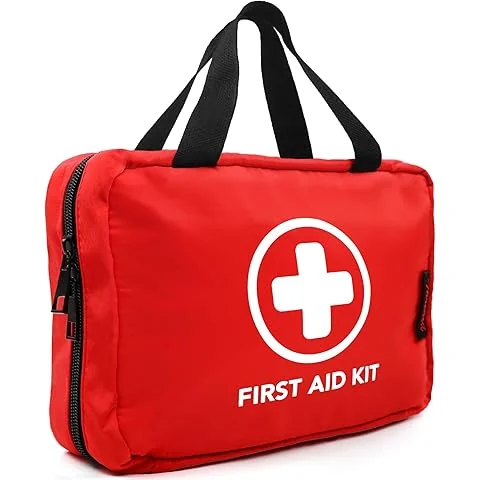
Most trail injuries are small and very annoying
A blister that develops on mile 3 of a 7-mile trail at Tallulah Gorge will determine whether you finish the hike or turn back. A shin scrape from a narrow Cloudland Canyon switchback that goes untreated gets worse, not better, over the next 4 miles back to the trailhead. Splinters from wooden bridge handrails, minor cuts from scrambling over boulders, sunburn blisters from an exposed ridge walk — these are not emergencies, but they are the category of problem that ends trips early and makes the last half of a hike miserable. The gap most hikers have is not disaster preparedness — it's the absence of a blister pad, antibiotic ointment, and a properly sized bandage when they need them. A compact first aid kit solves exactly this category of problem for under 1 pound of pack weight.
What we looked at first
We looked at the Johnson & Johnson All Purpose First Aid Kit and the Adventure Medical Kits Ultralight/Watertight series. Johnson & Johnson is the default kit sold everywhere and it works — the problem is loose organization inside a zip pouch that becomes chaotic after one use and makes finding a specific item a 30-second fumble. The Adventure Medical Kits Ultralight/Watertight is the superior choice for backpackers doing multi-night trips in wet climates (it's waterproof, not just water-resistant) but at twice the price for a first-time kit buyer. Surviveware's small kit hits the organizational standard that the J&J kit misses — labeled color-coded compartments — at a price point that works as a pack staple rather than a dedicated purchase for a specific trip.
What you get
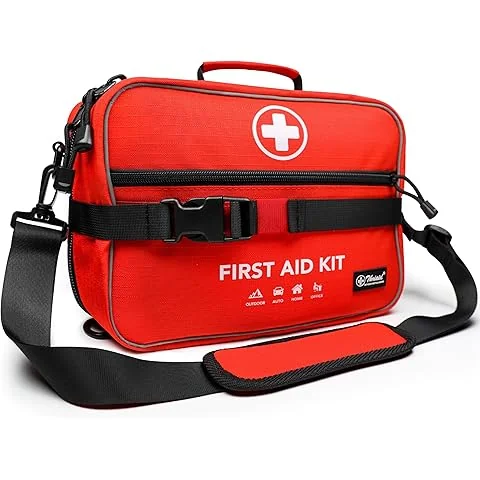
- Labeled, color-coded compartments — each type of supply has a dedicated section you can navigate with one hand and no light, which is the realistic condition when you need the kit
- MOLLE-compatible exterior loops — attaches to pack webbing or hip belt for pack-outside access; easier than digging through bag contents on a narrow trail
- Blister treatment supplies included — moleskin and blister pads are the single most-used item in any hiking kit; most generic kits omit them
- Compact at 7.4 x 4.3 x 1.3 inches — fits in a top-lid pocket or day pack main compartment without changing how the pack sits
Who this is for
Day hikers and overnight backpackers doing any trail with significant distance from the trailhead — specifically anyone doing 5+ mile hikes in Georgia, Tennessee, or Florida where return takes 2+ hours and a minor problem will either end the day or compound over time. Road trippers who park and hike at each destination and don't want to carry a full car kit on trail. Families with children on any outdoor activity where scraped knees, splinters, and minor cuts are a statistical certainty.
Where to use it on your trip
Tallulah Gorge State Park in Georgia — the gorge floor trail descends 1,100 feet on rocky switchbacks to the suspension bridge; blisters, scrapes, and ankle bumps against rock faces happen on every busy day here. Cloudland Canyon State Park in Georgia — the canyon rim trail and waterfall staircase involve sharp sandstone edges and wooden staircases; splinters and scrapes are common especially with children. Fall Creek Falls State Park in Tennessee — the trail to the base of the falls crosses roots, wet rocks, and uneven terrain where a slip produces exactly the kind of injury a kit addresses.
Who should skip it
Car campers at developed campgrounds with ranger stations on site, or visitors to parks where a paved walkway leads to the main attraction and there's no trail distance involved, don't need to carry this on their person. If your car is never more than a quarter mile away, your car's glove compartment kit covers most scenarios.
Our take
Buy this before any hiking trip that puts you more than 3 miles from your car. The Surviveware's organizational structure is the reason to choose it over the cheaper J&J kits — being able to find the blister pad in under five seconds while on a narrow switchback is the entire value proposition. Skip it if you're staying in developed areas with no real trail distance.
We may earn a commission if you purchase through our link, at no extra cost to you.