Columbia Newton Ridge Plus II Waterproof Hiking Boot
Southern mountain trails are wet at the creek crossings in spring, muddy after rain in fall, and hard on ankles year-round. The right boot handles all three.
What the trail actually looks like underfoot
Georgia and Tennessee mountain trails are not the clean gravel paths they look like in trail guide photos. The creek crossings on gorge trails have wet, algae-coated rocks that send trail runners sliding. The switchback sections after a day of rain turn to slick clay that eats low-cut shoes. Exposed roots on hardwood-forested ridges are genuinely ankle-twisting in the wrong footwear. This is not unique to one or two trails — it describes most of the Southern Appalachian trail system for most of the hiking season. A waterproof mid-cut boot with real ankle support is not a luxury upgrade for these trails. It's the right tool for the terrain.
What we looked at first
We looked at trail runners and ruled them out for technical terrain — they're excellent for well-groomed dirt paths but provide no waterproofing for creek crossings and no ankle support for the rocky Georgia gorge trails where a rolled ankle is a genuine evacuation problem. We looked at the Merrell Moab 3 (a highly reviewed hiking boot) and found it a better boot on rough technical terrain, but heavier and significantly more expensive than what most Southeast trail hikers need for moderate-difficulty state park trails. We looked at unbranded Amazon hiking boots under $60 and found the same pattern across reviews: the waterproof lining fails within two seasons, the midsole compresses flat and loses cushion, and the lug pattern wears down faster than expected on granite and gravel.
What you get
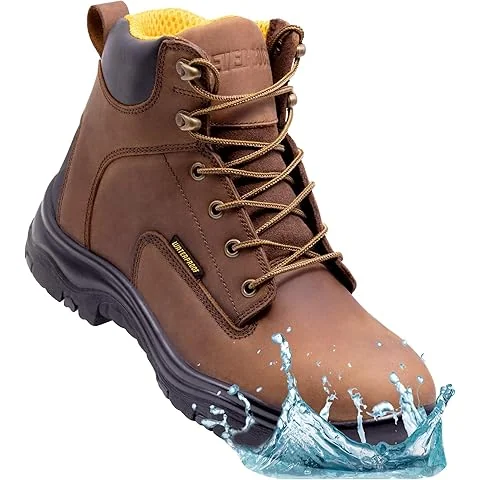
- Waterproof full-grain leather and mesh upper — creek crossings and morning dew don't reach your socks
- Techlite+ midsole with high-energy return — cushions long descents on switchback-heavy trails
- Omni-Grip non-marking traction outsole — designed for wet rock and root-covered trail surfaces
- Mid-cut collar provides ankle support without the stiffness of a full mountaineering boot
Who this is for
This is for the hiker doing moderate-difficulty trails in Georgia and Tennessee — trails rated 'moderate' to 'strenuous' on AllTrails, with elevation change between 500 and 2,000 feet, on terrain that includes creek crossings, roots, and exposed rock. It's for the traveler who hikes three to six days per year and needs a durable, capable boot that doesn't require break-in time on the first day. It's not a boot for first-time hikers on paved interpretive trails, and it's not a boot for serious mountaineers on technical rock.
Where to use it on your trip
At Tallulah Gorge in Georgia, the gorge floor trail descends 1,100 feet on switchbacks and crosses the Tallulah River twice on slick granite slabs — the waterproofing and ankle support are directly relevant here, not theoretical. At Great Smoky Mountains National Park in Tennessee, the Alum Cave Trail and Chimney Tops Trail both have rocky stream crossings that will soak trail runners by mile one in spring. At Fall Creek Falls State Park in Tennessee, the trail to the base of the main falls traverses permanently wet rock from the spray zone — grip matters here more than on any other trail in the park.
Who should skip it
If your hiking is limited to flat, paved nature walks — boardwalks, interpretive trails, Florida flatwoods — these boots are unnecessary weight. Skip them also if you're hiking in Florida's sandhill scrub or coastal trails where the terrain is soft sand and the elevation change is measured in feet, not hundreds of feet. For strictly city walking in Savannah, Nashville, or Atlanta, comfortable walking shoes are the right call.
Our take
Buy these if you're hiking any elevation-gain trail in Georgia or Tennessee — Tallulah Gorge, Smoky Mountains, Fall Creek Falls, or any of the dozens of state park trails in the Southern Appalachians that involve creek crossings or wet rock. The Columbia Newton Ridge delivers the right spec for this terrain at a price that doesn't require justifying to a hiking partner. Skip them for Florida, coastal trails, and flat terrain where a trail runner or walking shoe is genuinely sufficient.
We may earn a commission if you purchase through our link, at no extra cost to you.