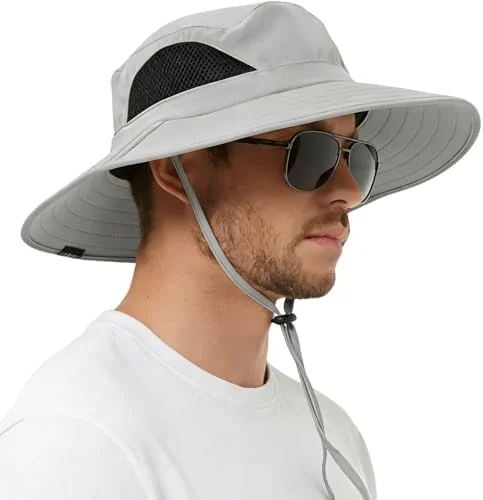
Wide Brim UPF 50+ Sun Hat
A baseball cap protects your face. The Florida sun at 11 AM doesn't stop at your face.
The sunburn you didn't plan for
Florida gets 237 sunny days per year. Georgia's coastal and central regions aren't far behind. The problem with outdoor travel in these states in summer isn't the heat — it's the UV index, which hits 10 or above by mid-morning from May through September and stays there for six hours. A baseball cap in that UV environment protects the nose and forehead and leaves the ears, neck, and cheeks fully exposed. The ears and the back of the neck are where most people get their worst outdoor sunburns — not because they forgot sunscreen on those areas, but because they applied it once at 9 AM and it was gone by noon. A wide-brim hat creates physical protection that doesn't wash off, doesn't sweat off, and doesn't require reapplication.
What we looked at first
We looked at standard baseball caps and the coverage gap is the core issue — they protect roughly 40% of the area that actually needs protection in direct overhead sun. A lifelong baseball cap wearer going to Ichetucknee Springs for a two-hour tubing run in July will have a red neck and burned ears by the afternoon. We looked at sun hoodies with integrated UPF hoods and while they work, they're significantly hotter than a hat — adding a fabric hood over a sweating head in 92-degree Florida sun creates discomfort that many people will remove within the first hour, defeating the protection. We looked at cheap floppy hats under $10 and found two consistent problems in reviews: the brim collapses downward and blocks your vision in wind, and the hat itself acts as a sail that requires constant hand-holding on any breezy day — a chin cord is non-negotiable.
What you get
- UPF 50+ rated fabric blocks 98% of UV-A and UV-B rays — full-spectrum protection, not just heat blocking
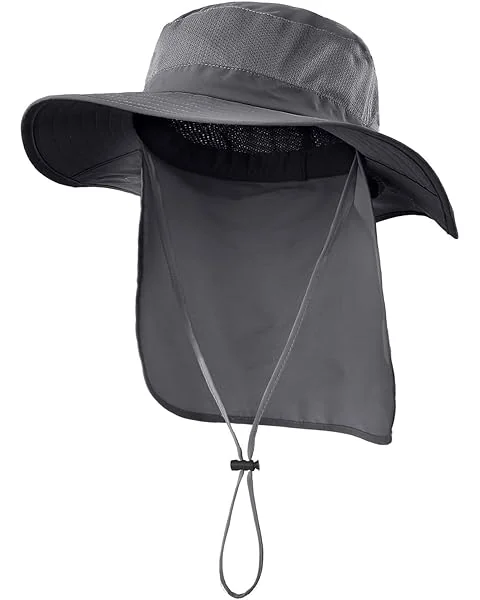
- Wide brim (minimum 3 inches all around) covers ears, neck, and cheekbones — the areas a baseball cap leaves exposed
- Chin cord keeps the hat on in coastal wind and on open water — no hand-catching required
- Packable and crushable — stuffs into a bag or suitcase pocket without permanent creasing
Who this is for
This is for anyone doing outdoor activities in Florida, coastal Georgia, or the open ridge trails of the Smokies between April and October — activities where you're in direct sun for two or more consecutive hours. It's particularly for the traveler who doesn't want to reapply sunscreen every 90 minutes throughout an active day and wants a physical UV barrier instead. It's for people who already wear baseball caps outdoors and don't realize that coverage leaves 60% of the actual burn zone unprotected.
Where to use it on your trip
At Ichetucknee Springs State Park in Florida, the tubing run down the spring puts you on open water in full sun for two to three hours — the hat stays on in the current better than sunscreen reapplies. At Driftwood Beach on Jekyll Island, Georgia, the beach is fully exposed with limited shade trees — the UPF rating matters here in the 10 AM to 2 PM window when the UV index peaks. At Myakka River State Park near Sarasota, the wildlife viewing areas are open savanna with no tree cover, and the tram tour puts you in direct overhead sun for an hour on each pass — a wide-brim hat is the single most practical UV mitigation you can bring.
Who should skip it
If your trip is primarily winter travel in the Southeast — Georgia in December, Tennessee in November — the UV index drops low enough that a baseball cap or no hat is genuinely fine. Skip it also for indoor-heavy trips focused on city attractions, museums, and restaurants where your outdoor time is measured in minutes between parking lots and doors rather than hours in open sun.
Our take
Buy this if you're spending any significant outdoor time in Florida or coastal Georgia between April and October — it's the most effective sun protection per dollar of any travel accessory, and it's the one piece of sun protection you won't forget to reapply. Skip it for winter travel or trips where your outdoor exposure is primarily in shaded forests and urban environments where overhead sun is blocked.
We may earn a commission if you purchase through our link, at no extra cost to you.