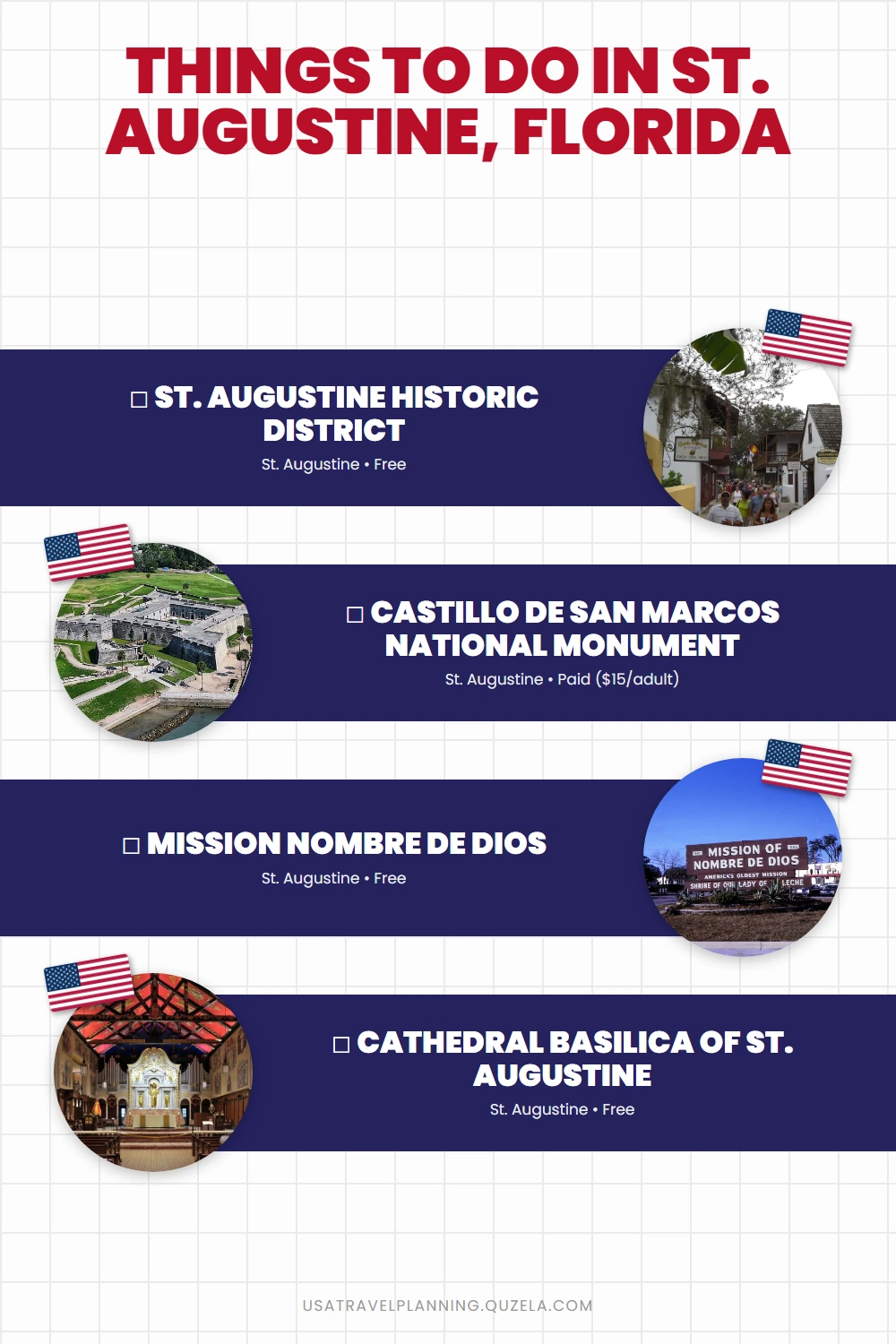
St. Augustine was founded by Spanish colonists in 1565 — 55 years before the Pilgrims landed at Plymouth Rock, making it the oldest continuously occupied European settlement in the continental United States. Its four main visitor sites are within 1.5 miles of each other: a coquina fort, a pedestrian historic district, the first Catholic mission site in the US, and the oldest continuously operating Catholic parish in the country.
4 destinations selected from a curated US travel dataset — prioritized by regional distribution, visitor significance, and independent research. Must-see and Worth-the-detour ratings reflect relative value within Florida.
Jump to: Historic District · History & Landmarks · Spiritual Sites · Planning Notes · Also worth visiting
Historic District
St. Augustine Historic District Must-see
St. Johns County · St. Augustine
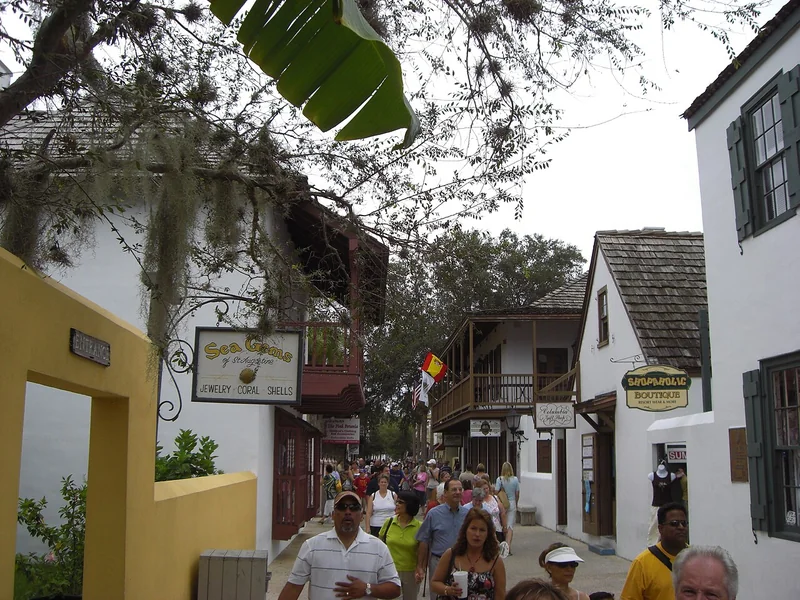
The Historic District spans roughly 25 blocks anchored by St. George Street — a pedestrian-only corridor lined with Spanish Colonial, Minorcan, and Victorian buildings dating from the 1700s onward. Flagler College (1888), the Lightner Museum (1888), and the Government House Museum anchor the three main plazas. All street-level walking is free.
The Old Town Trolley ($32/adult) provides on-and-off access to 23 stops across the district and running commentary on each site. Horse-drawn carriage rides depart from Avenida Menendez for a 45-minute loop through the historic core at $30 per adult. Most shops and restaurants are concentrated on St. George Street, which is closed to cars between Cathedral Place and Orange Street.
Right for all visitors as the essential orientation to the oldest continuously occupied European settlement in the continental United States; walking St. George Street is free and sets up everything else. The Old Town Trolley is worth it for visitors who want running commentary on the architecture.
Watch on YouTube · View on Google Maps
History & Landmarks
Castillo de San Marcos National Monument Must-see
St. Johns County · St. Augustine
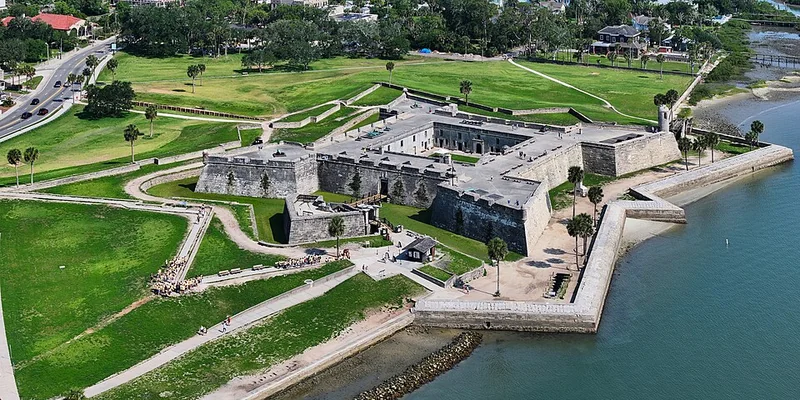
Construction on the Castillo began in 1672 and was completed in 1695, making it the oldest masonry fort in the continental United States. The Spanish built it from coquina — a local shellstone composed of compressed shells and coral — which absorbs cannonball impact rather than shattering, a property that allowed it to survive two major British sieges. NPS admission is $15 per adult; ages 15 and under are free.
Ranger programs run daily at 10:30am and 2:30pm covering the fort's military history, colonial period, and construction materials. Arrive before 10am on peak-season weekends — the parking lot directly across from the fort fills by mid-morning. The fort's gun deck provides an unobstructed view across Matanzas Bay.
Right for all visitors to St. Augustine; the 1672 fort is the physical reason the city survived its first two centuries and is the most impressive military structure in the Southeast. Attend the 10:30 AM or 2:30 PM ranger program — the coquina wall story is the main event.
Watch on YouTube · View on Google Maps
USA Travel Planner — Google Sheets
One purchase. Every US state. Forever.
A pre-filled travel dashboard for every US state — we are actively building them out.
- 75+ curated attractions — pre-researched for you
- Built-in budget tracker (countdown, expenses, remaining)
- Step-by-step planning tabs
- Buy once — get all future states free as they launch
Spiritual Sites
Mission Nombre de Dios (First Catholic Mission in the US) Must-see
St. Johns County · St. Augustine
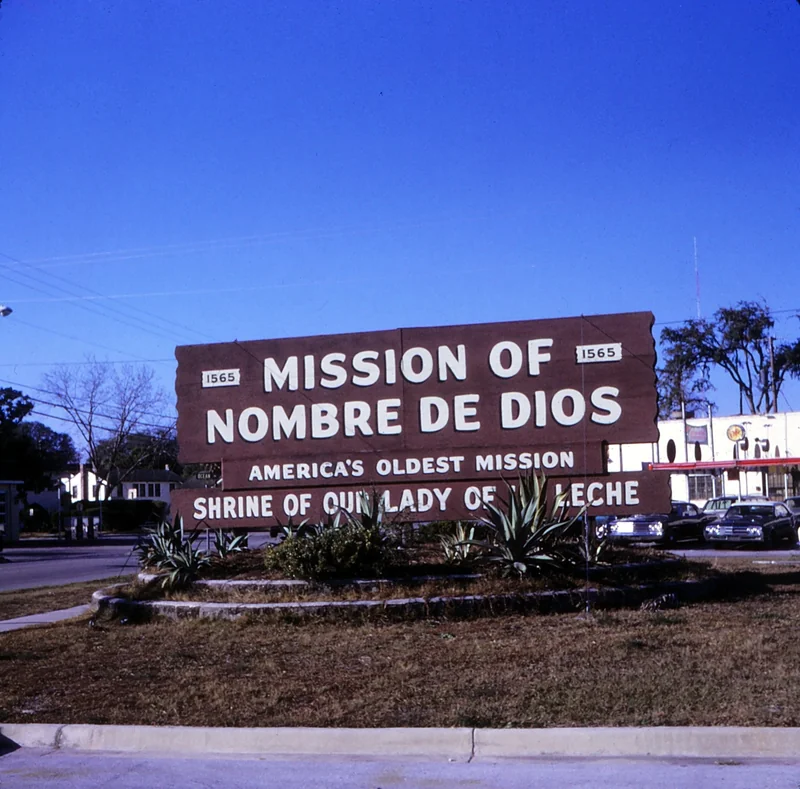
Mission Nombre de Dios was established on September 8, 1565 — the same day St. Augustine was founded — making it the site of the first Catholic Mass celebrated in what is now the United States. A 208-foot stainless steel cross erected in 1966 marks the original landing site along the Matanzas River. The grounds contain the Prince of Peace Church, a shrine to Our Lady of La Leche (the oldest Marian shrine in the country), and a small museum.
The site is free to enter and open daily. It sits 0.6 miles north of the main Historic District — a 12-minute walk north on San Marco Avenue from the Castillo de San Marcos.
Right for Catholic history travelers and anyone following the full thread of 1565 St. Augustine; the 208-foot stainless steel cross marks the site of the first Catholic Mass in what is now the United States. A free, peaceful 20-minute stop north of the main Historic District.
Watch on YouTube · View on Google Maps
Cathedral Basilica of St. Augustine Must-see
St. Johns County · St. Augustine
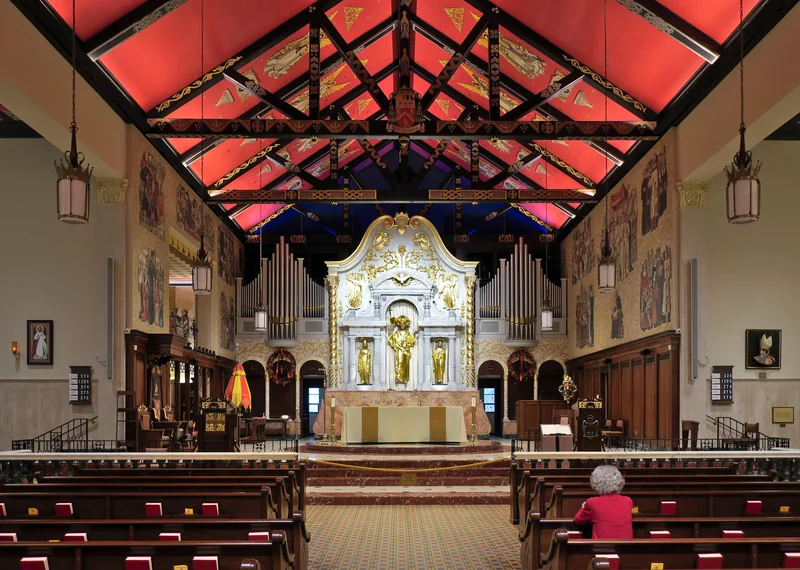
The Cathedral Basilica of St. Augustine traces its parish origins to 1565 — the founding year of the city — and the current building dates to 1797 with significant additions completed in 1887. It is the oldest Catholic parish in the continental United States and was designated a minor basilica by Pope Paul VI in 1976. The interior features a hand-painted ceiling, 19th-century carved wooden pews, and side chapels with Spanish colonial-era artwork.
Admission is free. Mass is held daily; Sunday services begin at 8am, 10am, and noon. The cathedral faces Cathedral Place in the center of the Historic District, one block south of the Castillo de San Marcos — making it a natural pairing with the fort on the same walk.
Right for all visitors passing through the Historic District; the oldest Catholic parish in the continental US is two blocks from the fort and free to enter. A 20-minute stop that puts the city's founding in full context.
Watch on YouTube · View on Google Maps
Planning Notes
Where to stay: Hotels and B&Bs on Cordova Street and San Marco Avenue are within walking distance of all four main sites. St. George Street boutique properties book up months in advance during spring and fall — reserve early. If you plan to visit the beach, Anastasia Island hotels are 5 minutes across the Bridge of Lions and significantly cheaper.
Book ahead: The Castillo de San Marcos does not require advance tickets. Old Town Trolley tickets can be purchased online or at the stop. Ghost tours — the city has more than a dozen operators — fill up fast in October and around Halloween; book 1–2 weeks ahead if visiting then.
Getting around: All four sites in this guide are walkable from St. George Street. Parking in the Historic District is expensive and scarce — use the San Marco Avenue garage a few blocks north and walk south. The Old Town Trolley picks up at most major hotels and runs every 15–20 minutes during peak hours.