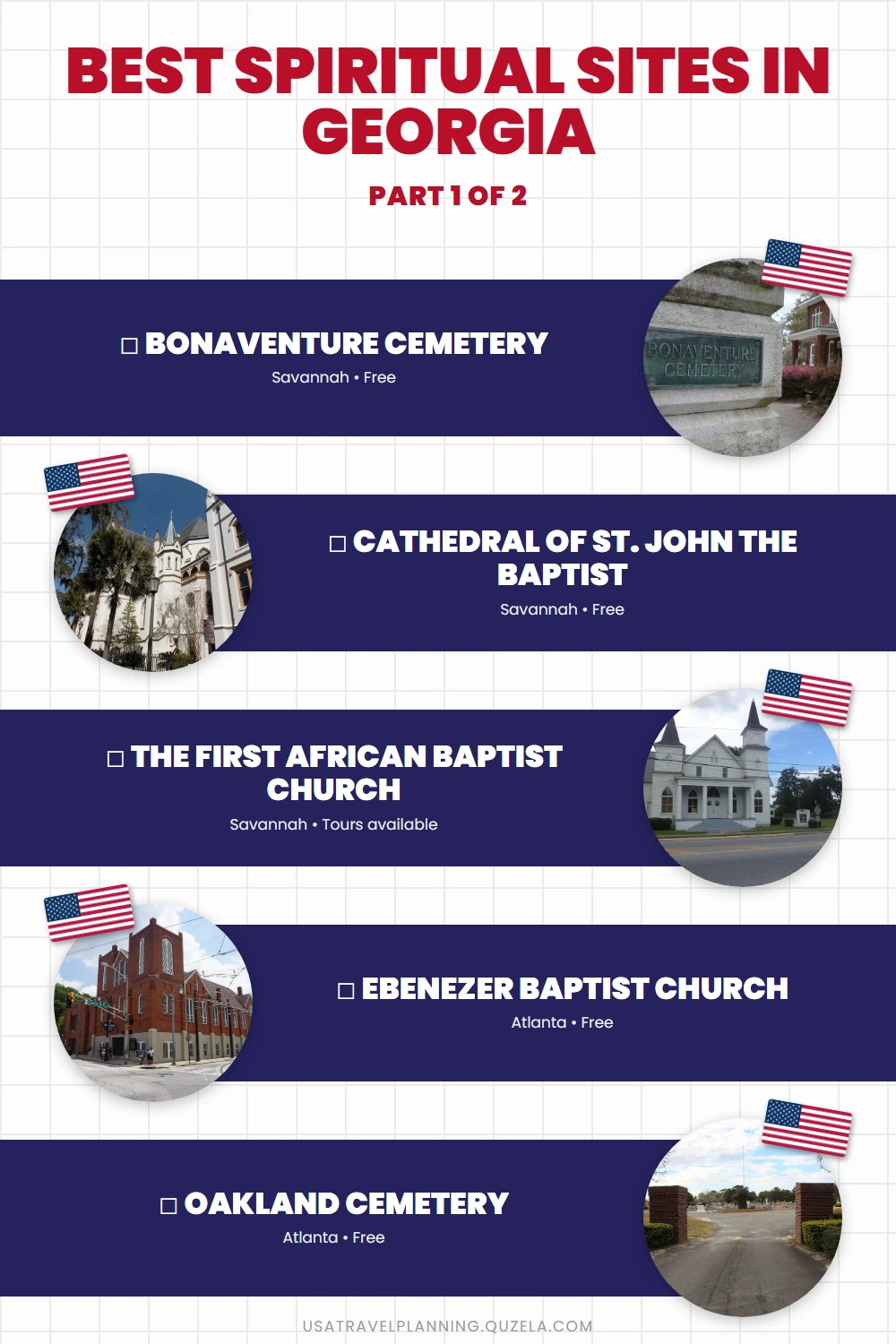
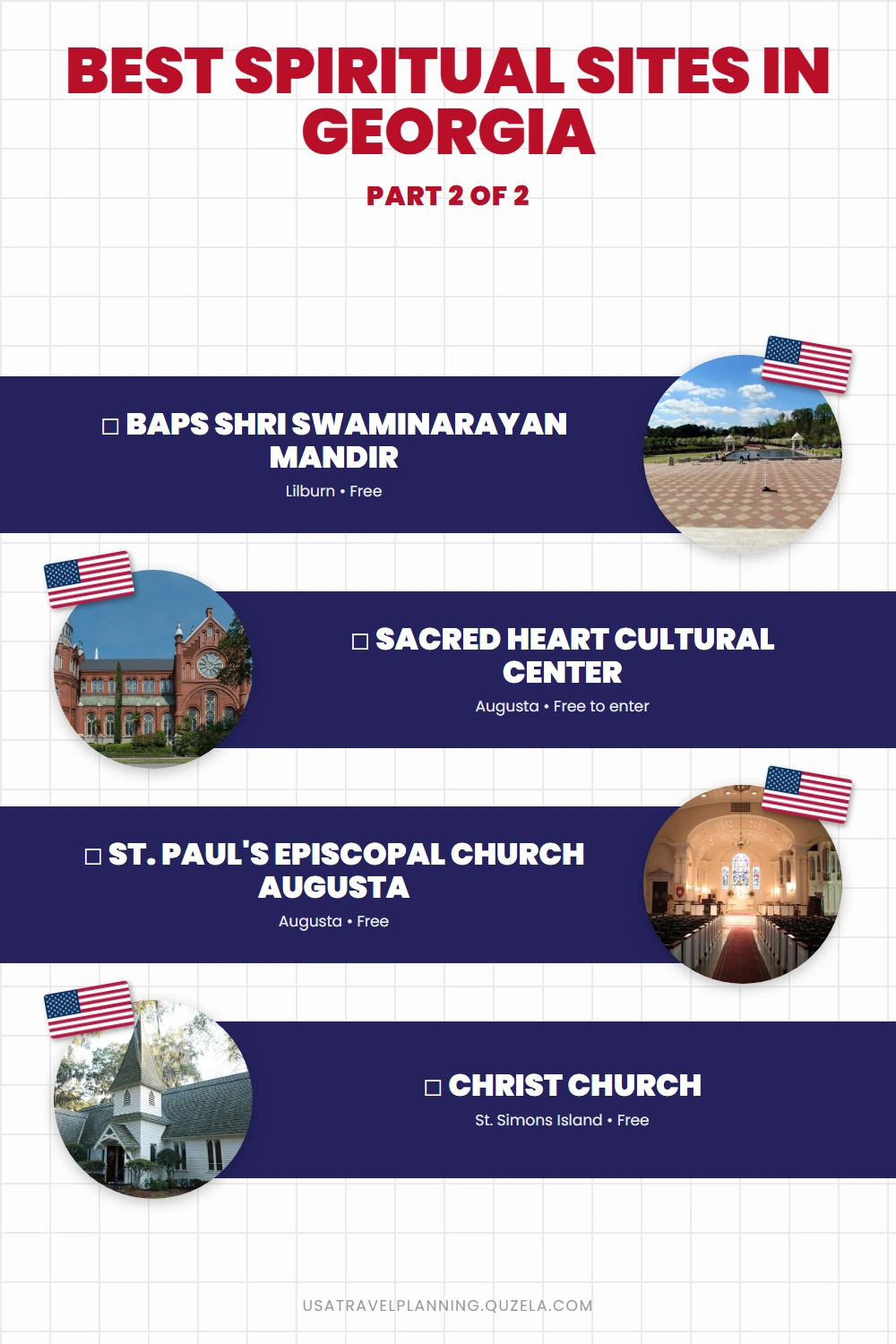
Georgia's spiritual landscape runs from one of the oldest Black congregations in North America to one of the largest Hindu temples in the United States. Savannah concentrates the most significant sites — a Gothic cathedral, a Victorian garden cemetery, and a church built by enslaved people. Atlanta has Ebenezer Baptist, where King preached. Augusta's Sacred Heart is a Baroque-inspired architectural landmark.
The 11 sites below span the state, grouped by city.
9 destinations selected from a curated US travel dataset — prioritized by regional distribution, visitor significance, and independent research. Must-see and Worth-the-detour ratings reflect relative value within Georgia.
Jump to: Savannah · Atlanta & Metro · Augusta · Coastal Georgia · Planning Notes
Savannah
Savannah's spiritual fabric is woven into its grid of historic squares. Three sites stand out as destinations in their own right.
Bonaventure Cemetery Must-see
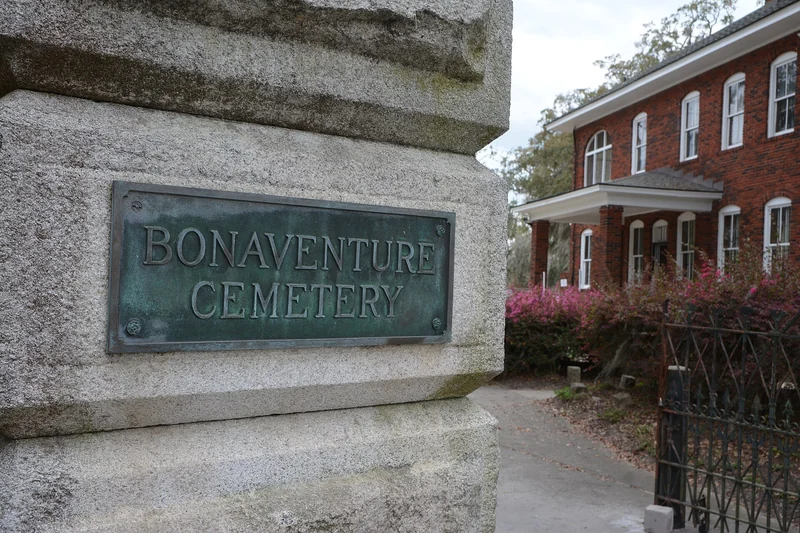
Chatham County · Savannah
A Victorian garden cemetery on a bluff above the Wilmington River, with live oaks hundreds of years old draped in Spanish moss over rows of elaborate 19th-century monuments. Established in 1846 on the grounds of a former plantation, Bonaventure became Savannah's most distinguished burial ground — Johnny Mercer, Conrad Aiken, and generals from multiple wars are buried here.
Midnight in the Garden of Good and Evil put the cemetery on the literary map, but Bonaventure deserves a visit purely for the landscape. Early morning or late afternoon offers the best light. Free during daylight hours.
Watch on YouTube · View on Google Maps
Cathedral of St. John the Baptist Must-see
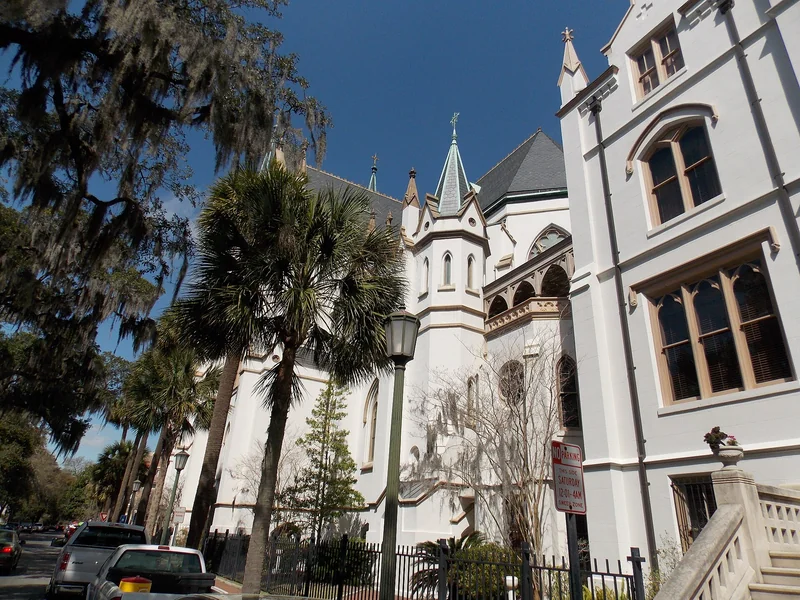
Chatham County · Savannah
The largest Catholic church in Georgia, a French Gothic cathedral with twin 183-foot spires that dominate Savannah's Lafayette Square. The interior features intricate stained glass windows imported from Austria, Italian marble floors, and Bavarian murals. The current building dates to 1876, rebuilt after a fire destroyed the original.
Free to enter.
Watch on YouTube · View on Google Maps
The First African Baptist Church Worth the detour
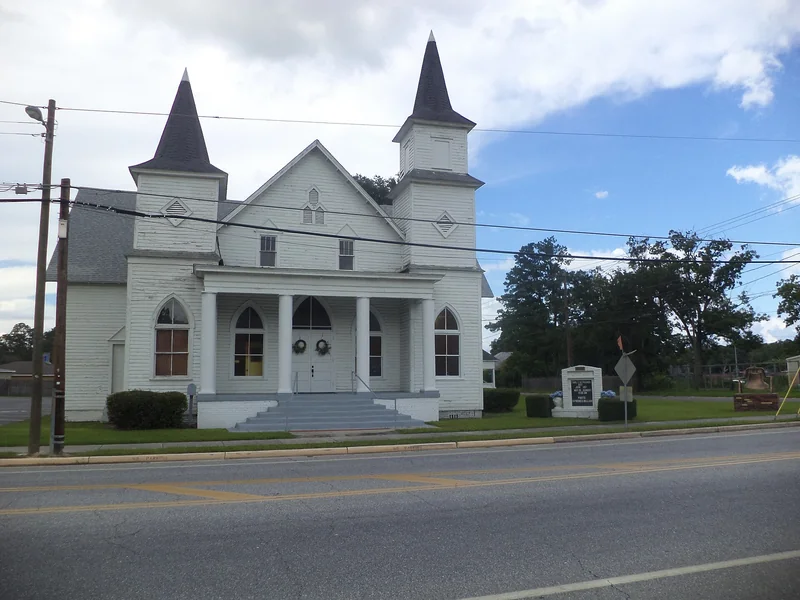
Chatham County · Savannah
Founded in 1773 by George Liele, an enslaved man who became the first Black missionary in American history, this is the oldest Black congregation in North America. The current building on Franklin Square was constructed in 1859 by enslaved congregation members — the pews and floor were installed by hand. Distinctive diamond-shaped holes in the floor served as air ventilation but also preserve African cosmological symbols carried from West Africa.
Guided tours explain the full history. The congregation still holds services here.
Watch on YouTube · View on Google Maps
Atlanta & Metro
Ebenezer Baptist Church (Historic Site) Must-see
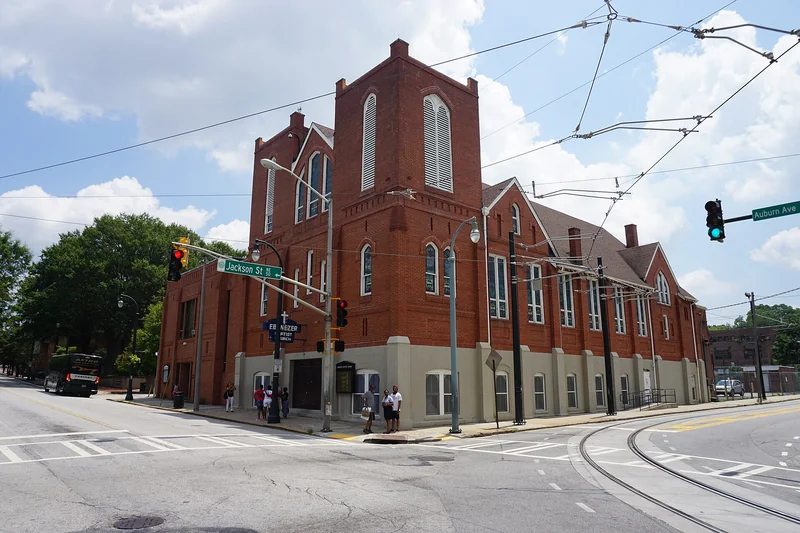
Fulton County · Atlanta
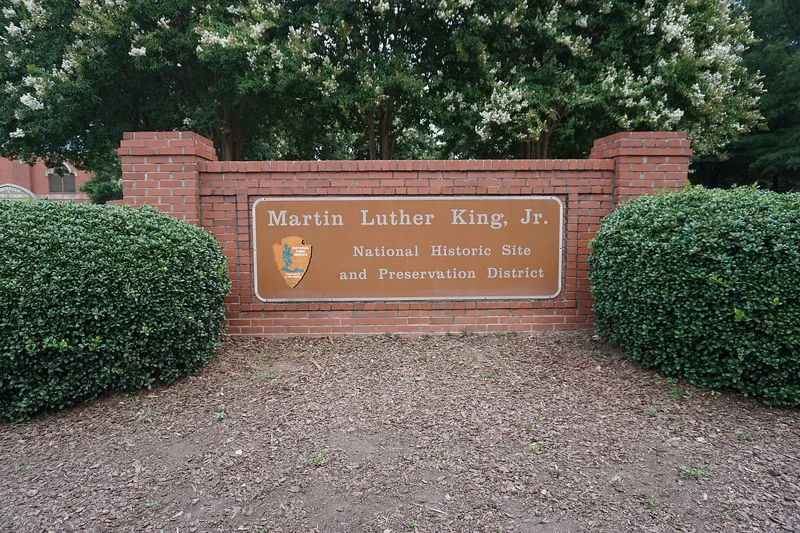
The historic church in Atlanta's Sweet Auburn neighborhood where Martin Luther King Jr. was baptized, ordained, and co-pastored with his father from 1960 to 1968. The original 1922 building is preserved as a National Park Service site — self-guided tours walk through the sanctuary where King preached. The new Ebenezer, directly across the street, still holds active services.
Part of the MLK National Historical Park — free, no tickets required. A deeply significant American site.
Watch on YouTube · View on Google Maps
Oakland Cemetery Worth the detour
Fulton County · Atlanta
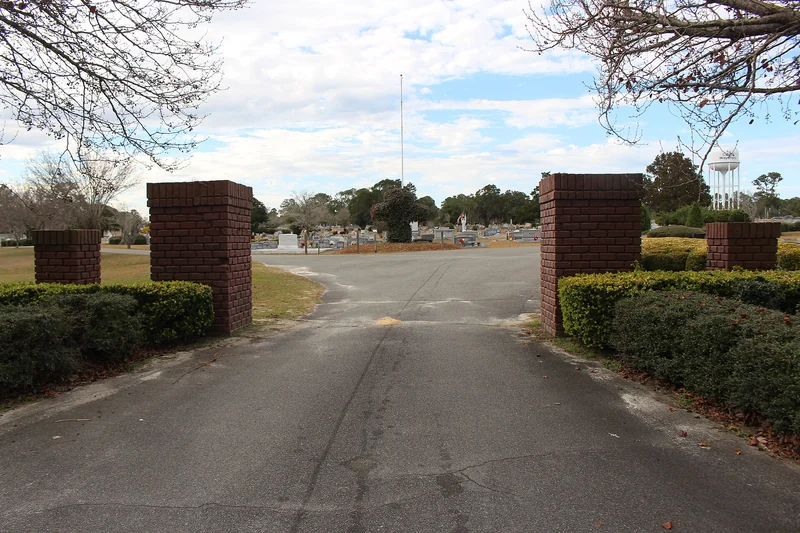
Atlanta's oldest and most historically significant cemetery, established in 1850 on 48 acres in the heart of the city. Six Atlanta mayors, governors, golfer Bobby Jones, and Confederate General John B. Gordon are buried here. The cemetery contains sections segregated by race from its founding — the African American section is one of the more historically significant portions.
Free to walk, well-maintained, and surprisingly beautiful given its urban location. Guided tours are available on weekends for deeper context.
Watch on YouTube · View on Google Maps
BAPS Shri Swaminarayan Mandir Worth the detour
Gwinnett County · Lilburn
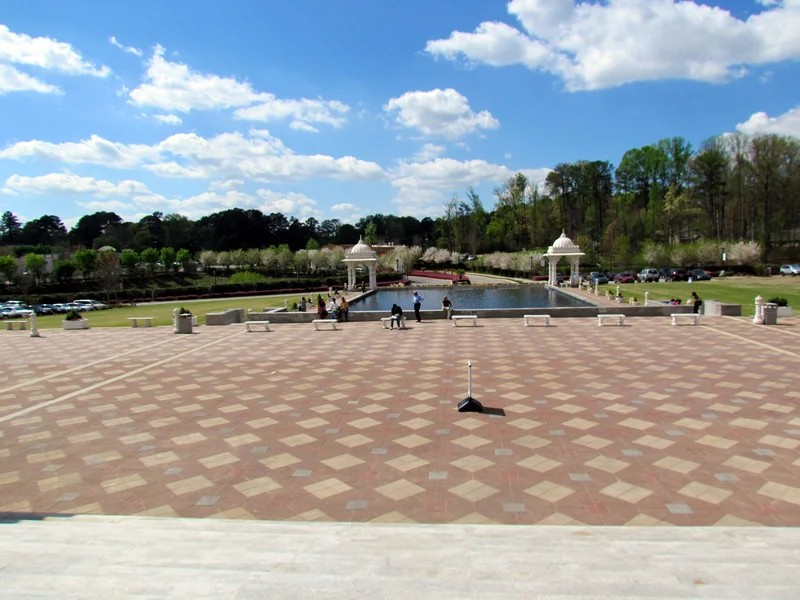
One of the largest traditional Hindu temples in the United States — a hand-carved marble and Turkish limestone structure built by BAPS (Bochasanwasi Akshar Purushottam Sanstha) and opened in 2007. The exterior alone is extraordinary: 34,000 pieces of hand-carved marble assembled without steel supports by artisans from India. The interior features carved pillars, domes, and shrines to Hindu deities.
Free to visit. A 30-minute drive east of Atlanta in Lilburn. Open daily; dress modestly.
Watch on YouTube · View on Google Maps
USA Travel Planner — Google Sheets
One purchase. Every US state. Forever.
A pre-filled travel dashboard for every US state — we are actively building them out.
- 75+ curated attractions — pre-researched for you
- Built-in budget tracker (countdown, expenses, remaining)
- Step-by-step planning tabs
- Buy once — get all future states free as they launch
Augusta
Sacred Heart Cultural Center Must-see
Richmond County · Augusta
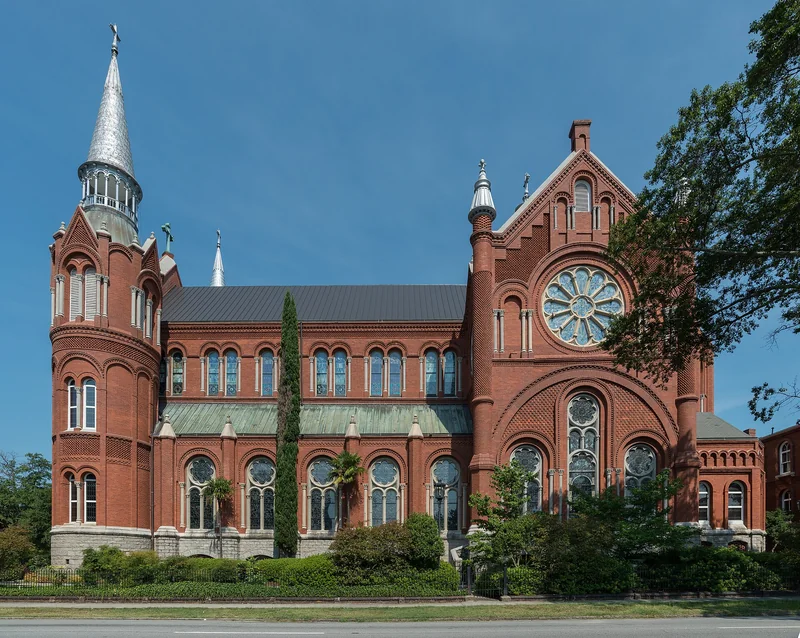
A former Catholic church (1900) converted into a cultural arts center — the only surviving Baroque ecclesiastical building in Augusta with its original interior intact — stained glass, painted ceilings, and ornate ironwork unchanged since 1900. The interior retains its original stained glass, painted ceilings, and ornate ironwork in near-perfect condition. Used for weddings, concerts, and gallery exhibitions; the space is open to visitors when no events are scheduled.
The exterior and interior are both worth seeing. Free entry during open hours.
Watch on YouTube · View on Google Maps
St. Paul's Episcopal Church Augusta Worth the detour
Richmond County · Augusta
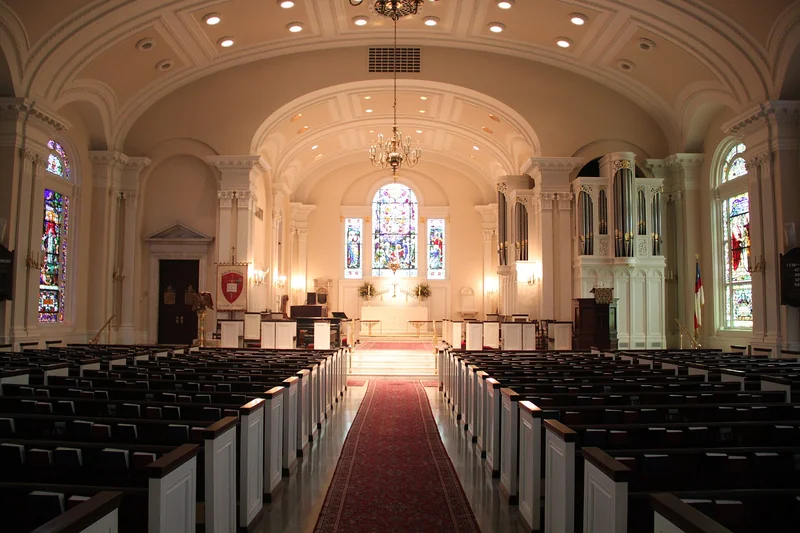
The oldest Episcopal congregation in Georgia, established in 1750 on the site of Fort Augusta. The current church building dates to 1919, but the parish registers go back to the colonial era. The churchyard contains graves from the Revolutionary War period. Located on Reynolds Street near Riverwalk Augusta.
A quick stop when exploring Augusta's historic district. Free to visit the church and grounds.
Watch on YouTube · View on Google Maps
Coastal Georgia
Christ Church (St. Simons Island) Worth the detour
Glynn County · St. Simons Island
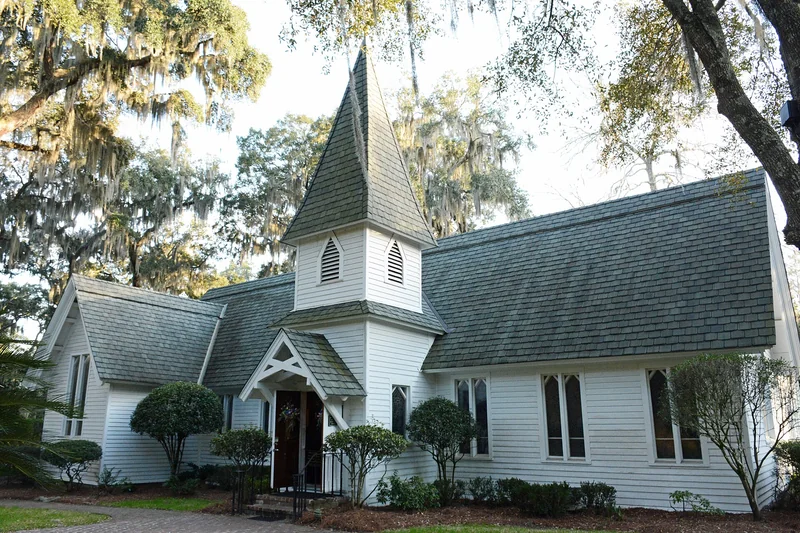
A white clapboard church established in 1736 by John and Charles Wesley — the founders of Methodism — during their mission to the Georgia colony. The current building dates to 1884, but the churchyard contains graves from the original colonial congregation. The setting, surrounded by ancient live oaks, is one of the more serene spots on the Georgia coast.
Free to visit. Located in the village area of St. Simons Island, easily combined with other island stops.
Watch on YouTube · View on Google Maps
Planning Notes
Plan your visit: Explore city guides for every destination in this article: Savannah, Atlanta, Augusta, Clarkesville, Glynn County.