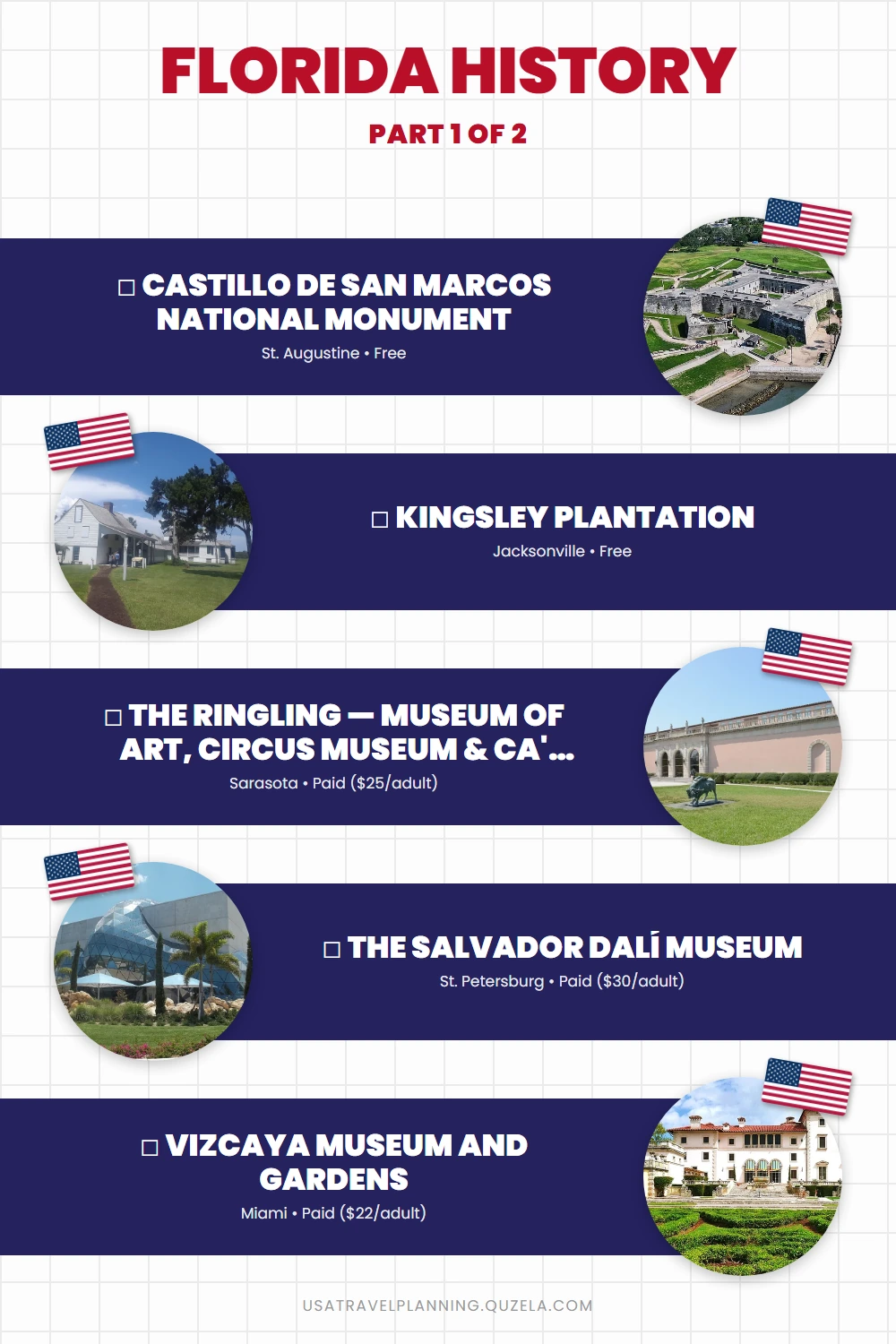
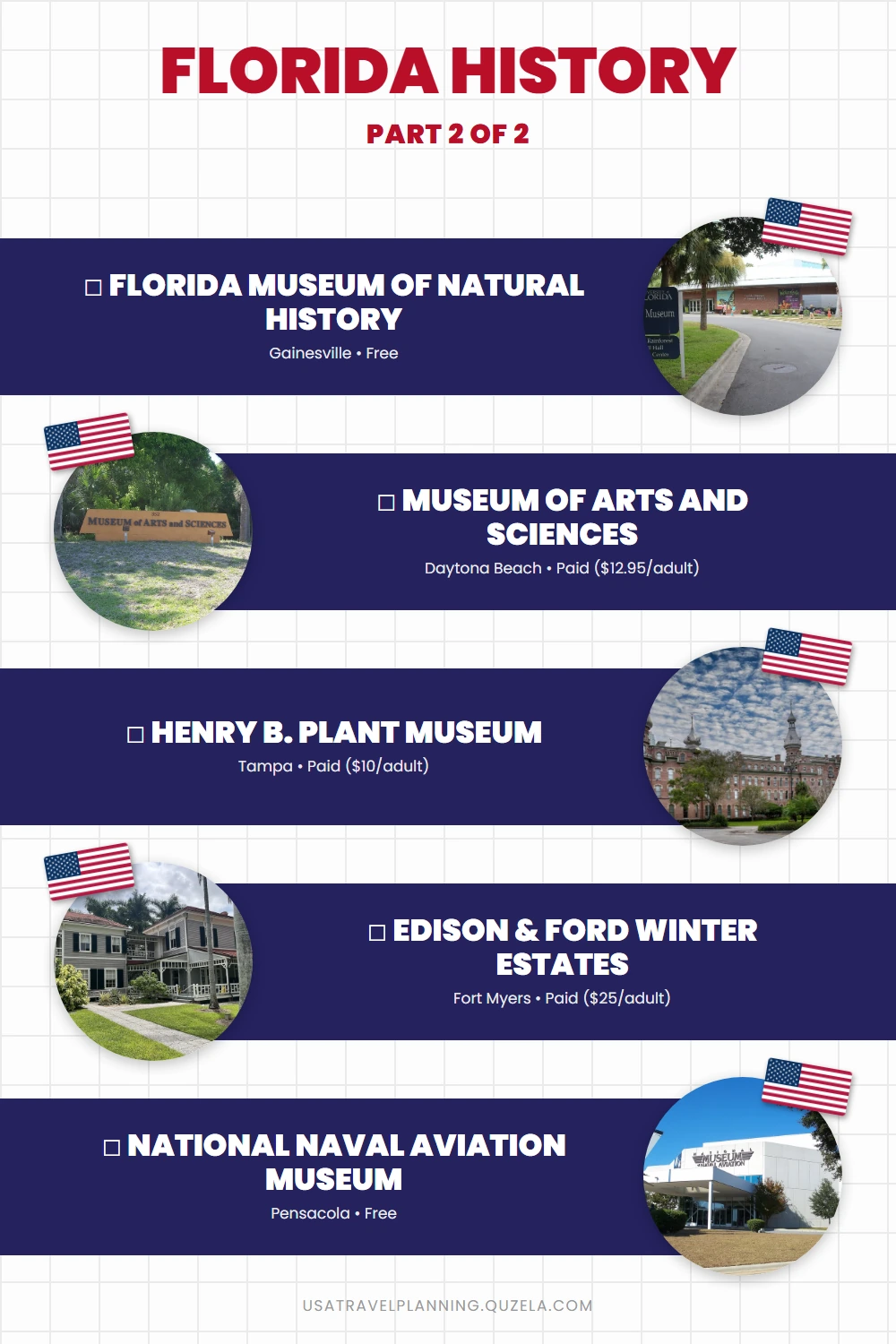
Florida's oldest history is concentrated in the northeast. St. Augustine was founded in 1565 — 42 years before Jamestown — and the Castillo de San Marcos (completed 1695) is the oldest masonry fort on the continent. Along the Gulf Coast, three extraordinary 20th-century museum estates take over: The Ringling in Sarasota holds 5 full-scale Rubens panels — the largest such collection in the US — and a Venetian Gothic mansion on the bay; the Dalí Museum in St. Pete holds 96 oils; and the Henry B. Plant Museum in Tampa preserves an 1891 railroad resort with 13 silver minarets. At the Naval Aviation Museum in Pensacola, 4 Blue Angels jets hang from the ceiling — free admission.
10 destinations selected from a curated US travel dataset — prioritized by regional distribution, visitor significance, and independent research. Must-see and Worth-the-detour ratings reflect relative value within Florida.
Jump to: Forts & Historic Sites · Museums & Art Collections · Historic Estates & Industries · Planning Notes
Forts & Historic Sites
Castillo de San Marcos National Monument Must-see
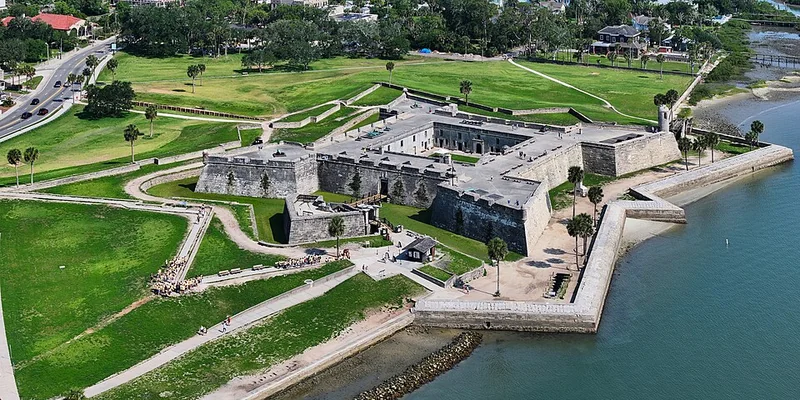
St. Johns County · St. Augustine
Castillo de San Marcos is the oldest masonry fort in the continental US, completed in 1695 after 23 years of construction using coquina — a locally quarried shell-stone that absorbs cannonball impacts rather than shattering, giving it a defensive advantage that outlasted every siege. The Spanish built it after British pirates burned St. Augustine in 1668, and the fort passed through Spanish, British, and American hands over the next 200 years. National Park Service rangers lead talks on the gunpowder magazine, the dry moat, and live cannon demonstrations on weekends. Admission is $15/person; open daily 9 a.m.–5 p.m. The exterior grounds and waterfront walkway are accessible even outside operating hours.
Watch on YouTube · View on Google Maps
Kingsley Plantation Must-see
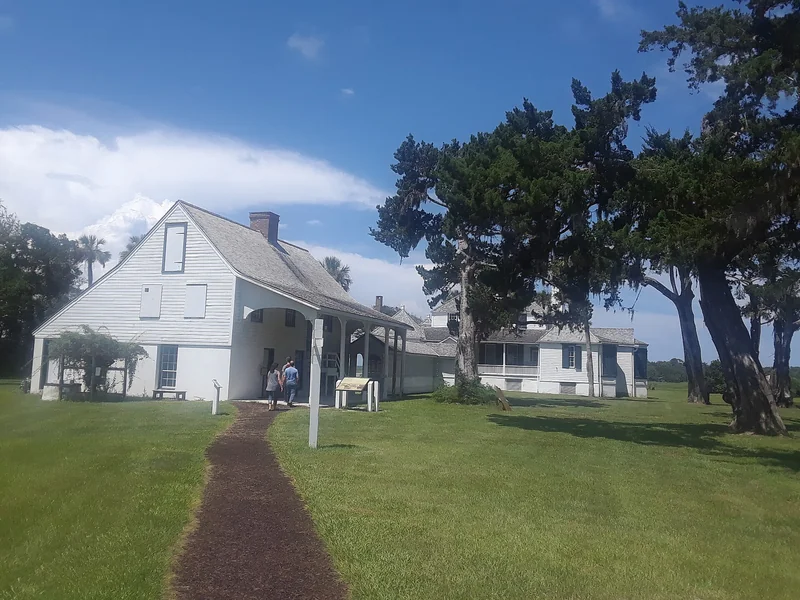
Duval County · Jacksonville
Kingsley Plantation on Fort George Island is the oldest surviving plantation complex in Florida, operated from 1814 to 1839 under Zephaniah Kingsley, whose wife Anna Madgigine Jai was an enslaved woman he manumitted and married after purchasing her in Cuba. 25 of the original tabby-constructed slave cabins remain standing — the largest collection of slave cabin ruins in the eastern US. The plantation house, barn, and kitchen are also preserved. National Park Service rangers lead interpretive tours Saturday and Sunday at 10 a.m. and 2 p.m.; free admission. Reach the island via the Mayport Ferry on FL-A1A or by driving Fort George Island Road.
Watch on YouTube · View on Google Maps
Museums & Art Collections
Florida's museum collections range from the surreal to the encyclopedic. The Dalí and Ringling both hold world-class European art; Vizcaya is a Gilded Age estate open to the public; MOAS covers Florida's prehistoric past.
The Ringling — Museum of Art, Circus Museum & Ca' d'Zan Must-see
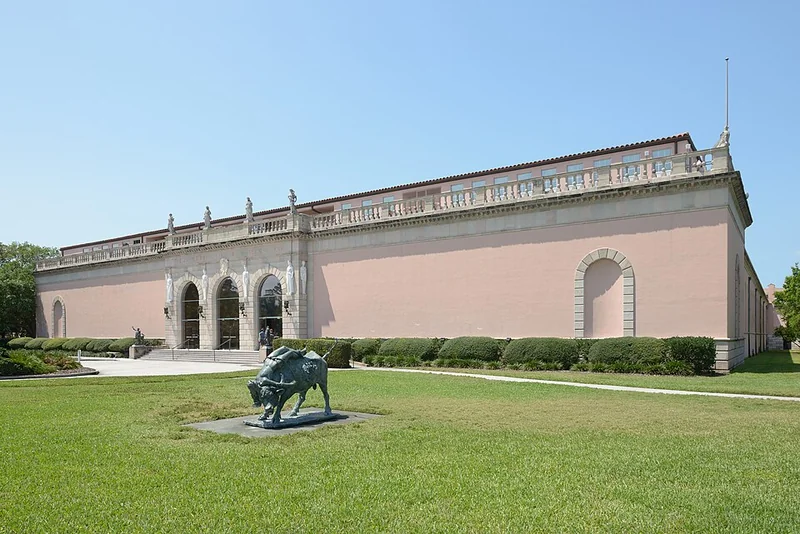
Sarasota County · Sarasota
John Ringling co-owned the Ringling Bros. and Barnum & Bailey Circus and built this Sarasota complex between 1924 and 1931. The Museum of Art holds 21 galleries with 600 paintings, including 5 full-scale Rubens cartoon panels painted for the Sistine Chapel tapestries — the largest such Rubens holding in the US. Ca' d'Zan, Ringling's 56-room Venetian Gothic winter mansion, sits on Sarasota Bay with original European furnishings. The Circus Museum traces American circus history with 44,000 artifacts including two of the original Ringling rail cars. Admission is $25; the Rose Garden and Bayfront grounds are free.
Watch on YouTube · View on Google Maps
The Salvador Dalí Museum
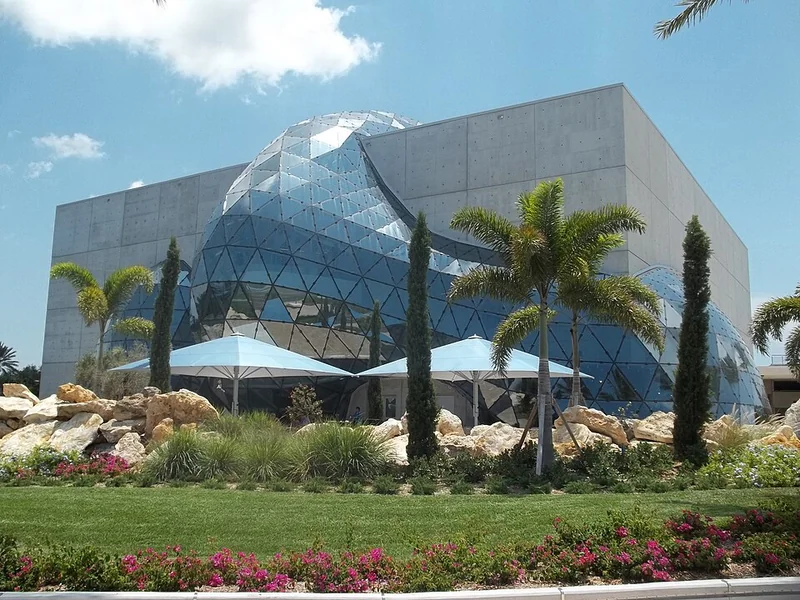
Pinellas County · St. Petersburg
The Salvador Dalí Museum in St. Petersburg holds the largest collection of Dalí's work outside Europe — 96 oil paintings, 100 watercolors and drawings, 1,300 prints, and 9 sculptures spanning his full career from early academic work through Surrealism to the nuclear mysticism period. The building itself, designed by Yann Weymouth and completed in 2011, features a geodesic glass bubble spiraling into the St. Pete waterfront. Admission is $30 for adults ($20 for ages 13–17; free under 6); Thursday evenings offer pay-what-you-wish admission after 5 p.m. The museum is closed Tuesdays. Check the website for which major works from the deep collection are currently on view.
Watch on YouTube · View on Google Maps
Vizcaya Museum and Gardens Must-see
Miami-Dade County · Miami
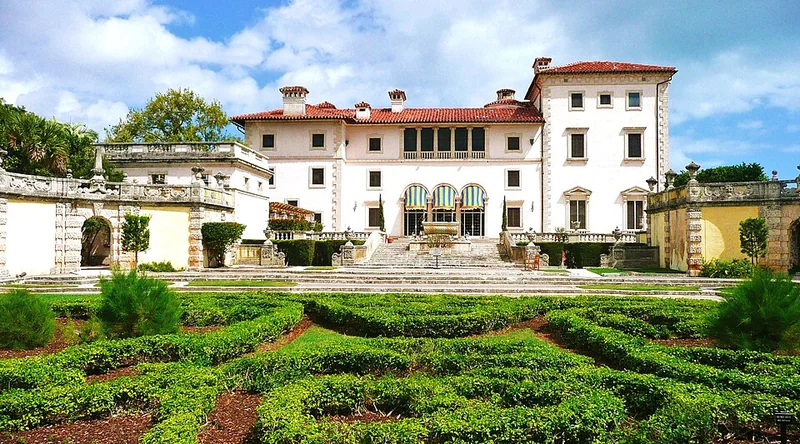
Vizcaya is the 1916 winter estate of International Harvester vice president James Deering — 34 furnished rooms of European Renaissance, Baroque, and Rococo antiques assembled on Biscayne Bay. The formal gardens cover 10 acres in the Italian Renaissance style with terraces, fountains, and a stone barge breakwater visible from the main terrace. Pope John Paul II used the estate as a summit venue during his 1987 US visit. Admission is $22 for adults, including the gardens. Open Wednesday–Monday, 9:30 a.m.–4:30 p.m.; closed Tuesday. The estate is in Coconut Grove, 5 miles south of downtown Miami on US-1.
Watch on YouTube · View on Google Maps
Florida Museum of Natural History Must-see
Alachua County · Gainesville
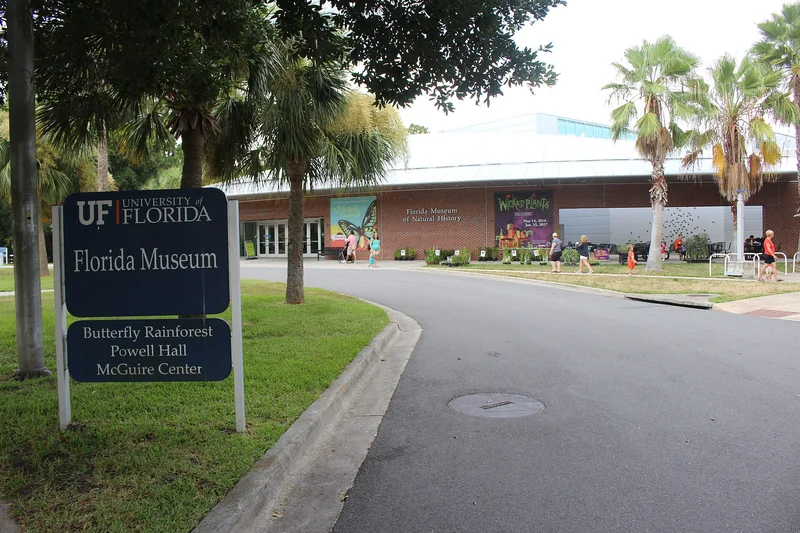
The Florida Museum of Natural History on the University of Florida campus is the state's official natural history museum and the largest natural history museum in the southeastern US — permanent admission is free. The Butterfly Rainforest is a 6,400-square-foot screened enclosure with 50+ butterfly species flying loose year-round; admission is $13. The permanent collection covers Florida's geology, 12,000 years of Paleo-Indian occupation, and the state's fossil record — the Hall of Florida Fossils includes a complete giant ground sloth skeleton. The museum is on Museum Road off US-441 in Gainesville, on the University of Florida campus.
Watch on YouTube · View on Google Maps
Museum of Arts and Sciences (MOAS) Must-see
Volusia County · Daytona Beach
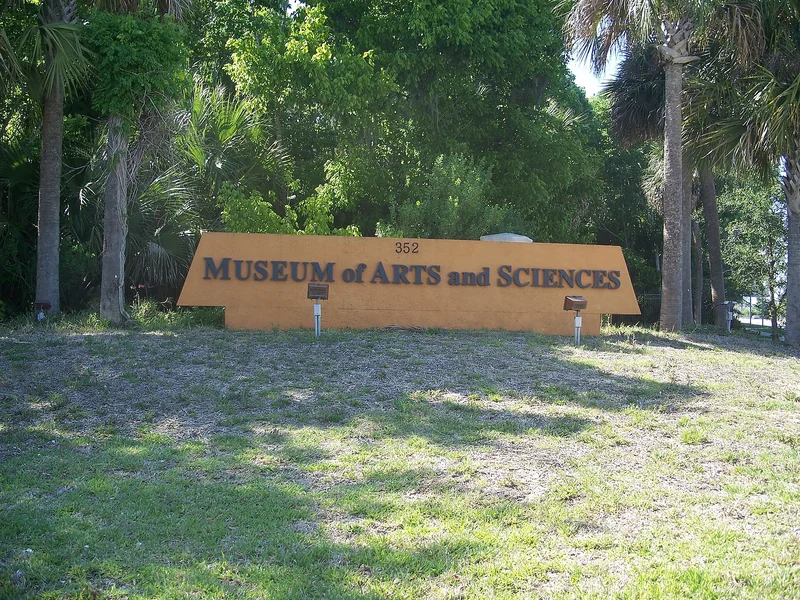
MOAS covers 350,000 square feet across 11 galleries in the Tuscawilla Preserve on International Speedway Boulevard. The Florida history collection includes a mounted giant ground sloth skeleton 13 feet tall, excavated in 1975 near Daytona Beach — the largest complete specimen found in Florida. The Cuban Museum, the only one of its kind in Florida, holds works tracing Cuban art and culture from the early colonial period through the 20th century. The attached Cici & Hyatt Brown Museum of Art holds 2,600 works of Florida landscape painting — the most comprehensive collection in the state. Admission is $12.95.
Watch on YouTube · View on Google Maps
USA Travel Planner — Google Sheets
One purchase. Every US state. Forever.
A pre-filled travel dashboard for every US state — we are actively building them out.
- 75+ curated attractions — pre-researched for you
- Built-in budget tracker (countdown, expenses, remaining)
- Step-by-step planning tabs
- Buy once — get all future states free as they launch
Historic Estates & Industries
Three Florida properties preserve the personal estates of American industrial figures — Edison, Ford, and Henry Plant — each showing how the state's climate attracted Gilded Age and Progressive Era wealth.
Henry B. Plant Museum (Tampa Bay Hotel) Must-see
Hillsborough County · Tampa
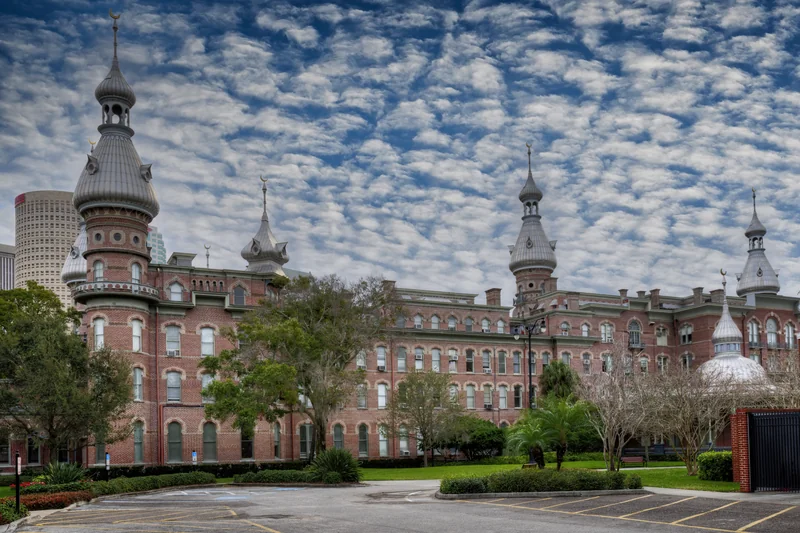
The Tampa Bay Hotel opened in 1891 as Henry Plant's 511-room luxury railroad resort, built in Moorish Revival style with 13 distinctive silver minarets at 93 feet each — still the most recognizable skyline element in central Tampa. The museum occupies the west wing of what is now the University of Tampa; 11 rooms have been restored with original Plant-era European antiques, including an 1891 chandelier from a French château. The Spanish-American War Council of War was held in the hotel in 1898 when it served as US Army headquarters during the Cuba campaign. Admission is $10; guided tours by appointment.
Watch on YouTube · View on Google Maps
Edison & Ford Winter Estates Must-see
Lee County · Fort Myers
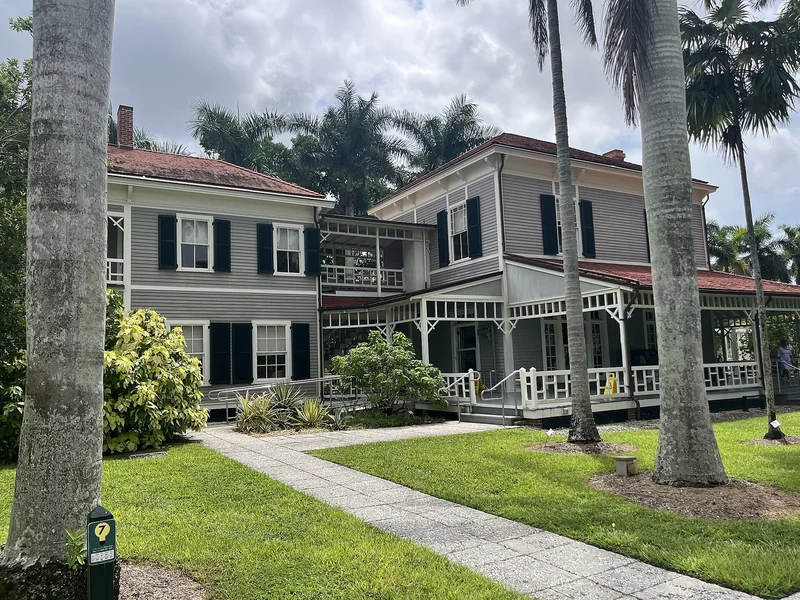
Thomas Edison and Henry Ford were winter neighbors on the Caloosahatchee River waterfront in Fort Myers — Edison's estate covers 20 acres and Ford's Mangoes cottage sits directly adjacent. Edison's 1886 laboratory on the property held ongoing experiments into natural rubber sources; he grew over 1,000 plant varieties testing goldenrod as a domestic rubber alternative. The banyan tree planted from a 4-foot seedling in 1925 now spans 400 feet across the waterfront grounds. Guided tours cover both estates daily; combination tickets run $25. Fort Myers is 130 miles south of Tampa on US-41.
Watch on YouTube · View on Google Maps
National Naval Aviation Museum Must-see
Escambia County · Pensacola
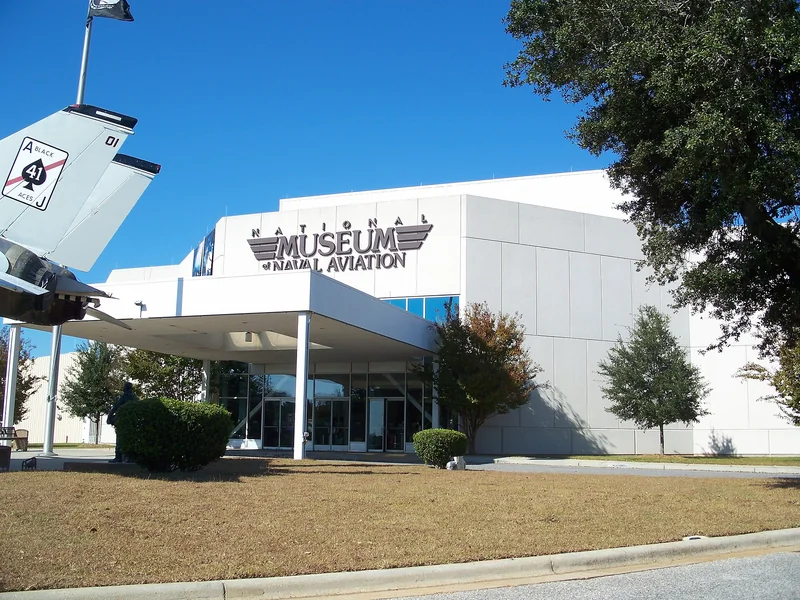
The National Naval Aviation Museum at Naval Air Station Pensacola holds 150 restored aircraft across 350,000 square feet — free admission, no reservation required. The collection spans from a 1914 Curtiss AH-1 biplane to modern F/A-18 Hornets, with 4 Blue Angels aircraft suspended in delta formation from the atrium ceiling 40 feet above the main floor. An IMAX theater on site runs daily films ($8/ticket). Non-military visitors must obtain a vehicle pass at the main NAS Pensacola gate — bring a valid driver's license plus proof of vehicle insurance and registration. The museum is on Blue Angel Parkway inside the base.
Watch on YouTube · View on Google Maps
Planning Notes
Plan your visit: Florida's history museums and sites are spread across the state — base cities depend on which sites you're combining. St. Augustine anchors the northeast with the Castillo, the Cathedral Basilica, and Mission Nombre de Dios; Jacksonville is 40 miles north and covers Kingsley Plantation. The Tampa guide covers the Henry B. Plant Museum; the Sarasota guide covers The Ringling; the St. Petersburg guide covers the Dalí Museum. For Miami, Vizcaya is 5 miles south of downtown in Coconut Grove. Daytona Beach covers MOAS; Pensacola covers the Naval Aviation Museum. Edison & Ford Estates in Fort Myers and the Florida Museum of Natural History in Gainesville are standalone day trips without a city guide — each takes a half day.